

Every business owner faces the same choice when it is time to buy a sign: walk into a sign shop or order off-the-shelf stock signage, or invest in a fully custom, brand-matched piece. The sticker price difference is obvious. The long-term difference is less obvious, and it is where most buyers get it wrong.
This article compares custom signs vs stock signs on branding, durability, impression quality, and total cost. It is written for a business that wants to know not just which is cheaper today, but which will still be doing its job five years from now.
What “Stock Sign” Actually Means
A stock or off-the-shelf sign is a pre-built product you personalize with your text. Think of generic “OPEN” boxes, standard plastic letter sets, mass-produced A-boards, and aluminum panel signs where you upload a logo and the printer wraps it. The factory has already built the cabinet, chosen the LED driver, selected the acrylic, and set the depth. You are buying a template.
Stock signs have their place. They are cheap, fast, and acceptable for temporary pop-ups, internal office labels, and internal wayfinding where brand precision does not matter.
What “Custom Sign” Actually Means
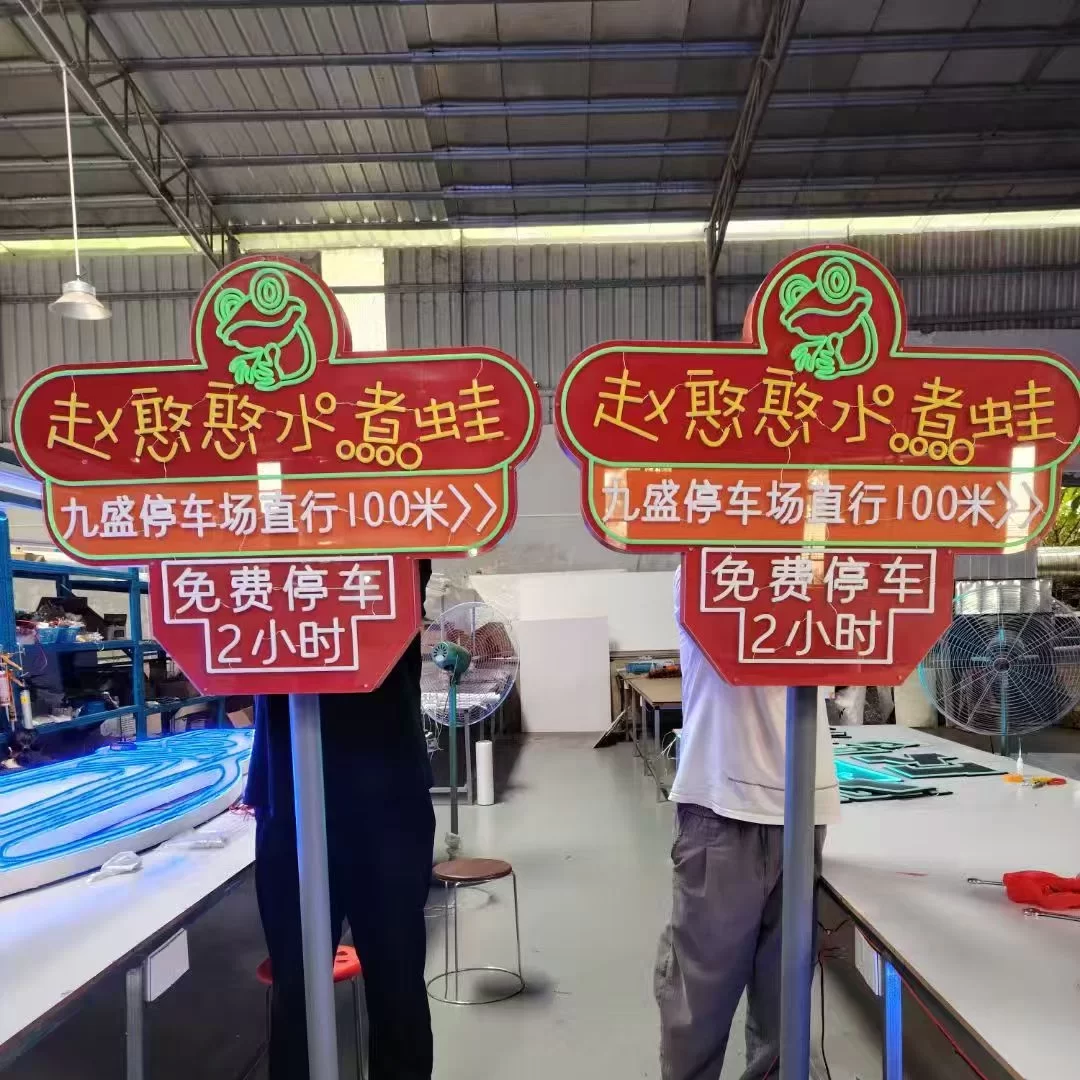
A custom sign is designed and built to your exact dimensions, materials, finish, lighting, and mounting. The manufacturer cuts acrylic on a laser, bends aluminum or stainless steel, welds returns, paints or powder-coats, assembles LED modules, runs an aging test, and packages it for export. Every part is yours. A bespoke piece can be painted acrylic dimensional letters, a fully custom 3D metal sign, or bespoke LED neon signs shaped to your logo outline.
Custom signs cost more up front because they are engineered for your building and your brand, not to a catalog.

Brand Consistency: The Hidden Cost of Generic
The first place stock signs lose is brand consistency. A generic sign uses whatever acrylic color, LED color temperature, and mounting depth the supplier had in stock. When you order a second sign for your second location, six months later, the color may not match. By the time you open a fifth location, you have five slightly different signs on five slightly different buildings.
Custom signage solves this at the source. Pantone and RAL values are locked into the production run. LED color temperature is specified (usually 6000K-6500K for cool white or 3000K warm white). Material grades are fixed. Ordering sign number twelve in a franchise rollout produces the same visual as sign number one. That consistency is what makes a brand feel established rather than accidental.
Durability and Lifespan
Stock signs are usually built to a price point, not a specification. Thin-gauge aluminum, low-grade acrylic that yellows in 2-3 years, and unbranded LED modules that dim quickly are common. The sign looks great on day one and embarrasses you by year three.
Custom signs are built to the specification you choose. UV-stable cast acrylic, 304 or 316 stainless steel, branded LED modules rated 30,000-50,000 hours, and TIG-welded construction commonly deliver 8-15 years of outdoor service, depending on usage, climate, and maintenance. The up-front cost is higher, but the replacement cycle is far longer.
To see how material choice changes real lifespan, our custom sign ROI and budget guide walks through the math.
Impression and Customer Perception
Customers judge a business by its exterior before they judge the product inside. A hand-cut, polished stainless steel or acrylic dimensional letter set says “this brand cares.” A generic vinyl-wrapped box says “this brand is temporary.”
This matters most in categories where trust is the purchase decision: medical clinics, financial services, jewelry, hospitality, and premium food. In these categories, a custom sign is not a marketing cost; it is part of the product.
Total Cost Per Impression
The right way to compare stock vs custom is not sticker price, but cost over the life of the sign.
- A $300 stock sign that fails and needs replacement in 3 years costs roughly $100/year.
- A $1,800 custom sign that lasts 10 years costs roughly $180/year.
On raw dollars, the stock sign looks cheaper per year. But the stock sign also:
- Looks generic and weakens brand trust.
- May not match your other locations.
- Often uses non-serviceable electronics.
- May fail during a critical season.
When you factor in replacement labor, downtime, and brand erosion, a well-built custom sign is often the better economic choice over a decade.
The Hybrid Middle Path
You do not have to choose all stock or all custom. Many smart operators split the difference: a fully custom illuminated exterior sign that customers see every day, paired with stock vinyl decals and printed posters for internal offices, restrooms, and temporary promotions. The exterior is where brand perception is formed; the interior signs are utility. This split lets you invest the custom budget where it matters and keep operational costs low where it does not.
The same logic applies when you test a new market. Order a small custom sign for the grand opening if you are committing to a lease of five years or more. If you are testing a pop-up for six months, start with stock graphics and upgrade to custom once the location proves out. The mistake is doing the opposite: spending custom money on a temporary wall, or running a permanent storefront off a stock sign you outgrew in month two.
When Stock Signs Actually Make Sense
Be honest with yourself. Off-the-shelf signage is the right call when:
- The sign is temporary (pop-up, construction hoarding, event).
- It is an internal office or wayfinding sign, not customer-facing.
- You have not yet locked your brand identity.
- You are testing a location before committing to a long-term lease.
- The visual difference between generic and custom is invisible to your customer.
In these cases, a custom sign would be over-investment.
When Custom Signs Pay Off
Custom signage is the right call when:
- The sign is on the exterior of a permanent business.
- You plan to open 2+ locations.
- Your brand relies on premium perception.
- The sign must match an existing brand system.
- You expect to be in the space for 5+ years.
This is where bespoke pieces like painted acrylic dimensional letters, custom 3D metal mascot logos, and LED neon installations earn their keep.
Working With a Custom Manufacturer
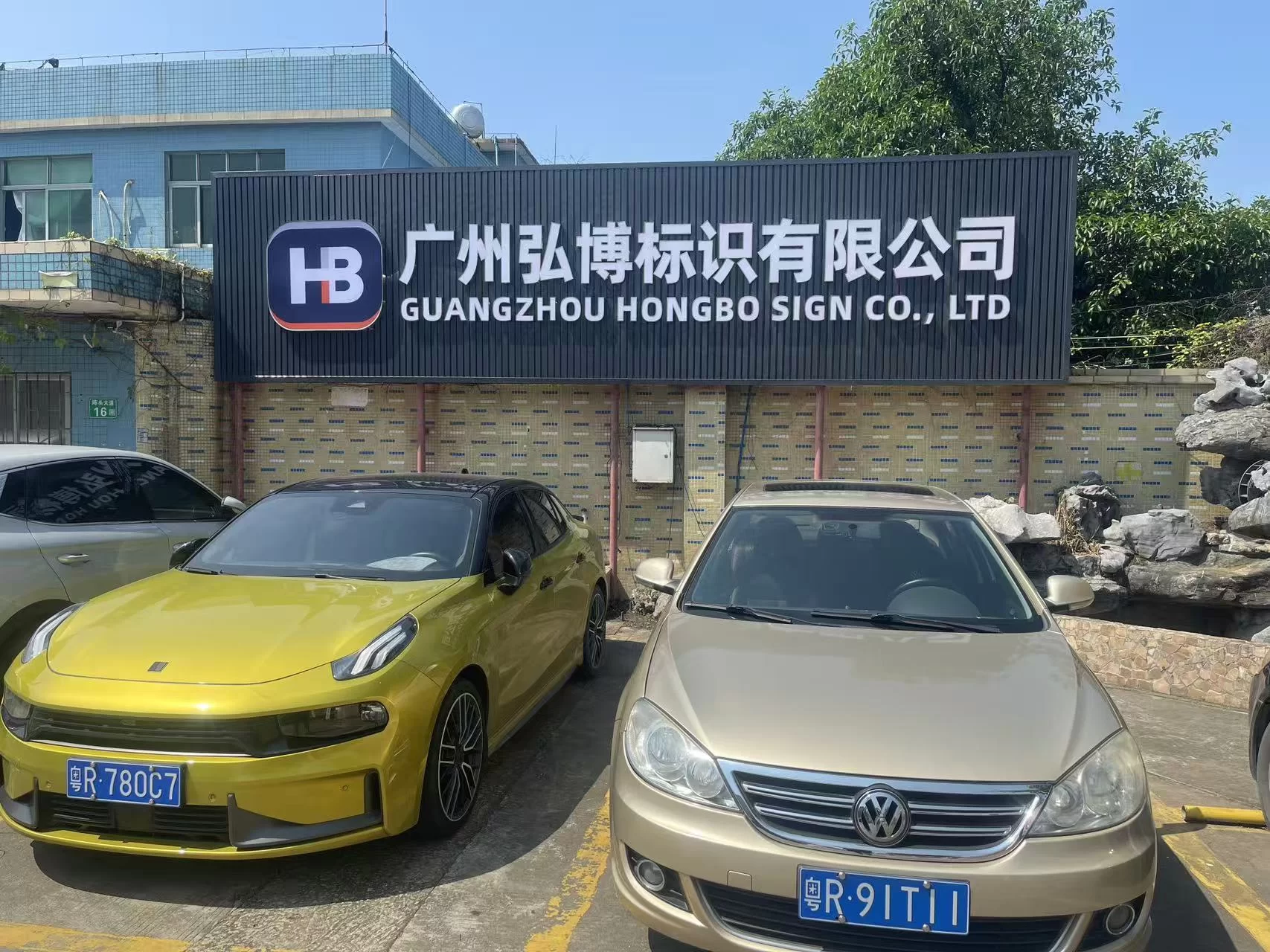
Ordering a custom sign is not just paying more; it is a different workflow. You supply vector artwork, approve CAD drawings, choose materials and finishes, and review photo evidence before shipment. At Hongbo Signage, this approval workflow is how we keep sign number twelve in a rollout visually identical to sign number one. Our guide to design files needed for production walks through exactly what to prepare so you do not delay your own order.
If you have never ordered from an overseas OEM/ODM factory, our article on choosing a sign manufacturer explains the trade-offs between local shops and Guangzhou-based production.
MOQ, Lead Time and Shipping
Professional custom sign manufacturers typically accept small entry orders of 1-5 pieces for standard products, which means even a single-location business can order custom; exact minimums depend on the product. Lead time is typically 10-25 working days after artwork approval, plus sea or air freight. Export-grade crating protects the sign through container shipping. QC runs at every stage, including a final aging test before the carton is closed.
What Buyers Should Prepare for a Sign Quote
If you are leaning custom, a precise brief is what separates a bespoke quote from a guess. Have these ready:
- Vector artwork in AI/EPS/PDF with fonts outlined and colors in Pantone/RAL.
- Final dimensions for every sign location, including letter heights.
- Quantity and rollout plan: single sign vs a matched multi-location program.
- Material and finish: acrylic dimensional letters, brushed/mirror stainless, 3D metal, or LED neon, with finish colors.
- Lighting and color temperature if the sign is illuminated.
- Mounting and wall details: wall material, standoff distance, wiring approach.
- Shipping destination and required delivery date.
- Brand system files: existing Pantone/RAL values and approved artwork so sign number twelve matches sign number one.

Frequently Asked Questions
Q: Are custom signs always more expensive than stock signs?
Up front, yes. Over a 5-10 year life, a well-built custom sign often competes on total cost because it avoids early replacement and looks better while it lasts.
Q: Can I just put my logo on a stock sign to make it “custom”?
No. Wrapping a generic cabinet with your logo still uses the supplier’s acrylic, LED, and frame. It will not match a true dimensional custom piece and often fades or delaminates within a few years.
Q: What is the minimum order for a fully custom sign?
Most OEM/ODM factories accept 1 piece for custom work, especially for channel letters, lightboxes, and neon. Better unit pricing kicks in at 5 pieces or more.
Q: How long does a custom sign take to make?
Production is typically 10-25 working days after artwork approval. Add sea freight (20-35 days) or air freight (5-10 days) depending on urgency.
Q: Do I need special design files for a custom sign?
Yes. A professional manufacturer needs vector artwork (AI, EPS, or vector PDF), fonts outlined, color specs in Pantone or RAL, and approved dimensions. Our design files guide explains this in detail.
Conclusion
Stock signs are a tool, not an enemy. They are right for temporary, internal, or unproven uses. Custom signs are the right choice when your exterior is your storefront, your brand is established, and you expect to be in the location for years. The difference is not just price; it is brand consistency, durability, and customer perception. Invest in bespoke where it is visible to your customers, and use off-the-shelf where it is not.
Wondering whether custom or stock signs are the right call for your brand?
Hongbo Signage provides OEM/ODM custom signage manufacturing from Guangzhou, China. Get a custom sign quote within 24 hours.