

Neon signs are having a moment. Restaurants, gyms, beauty studios, co-working spaces, and retail pop-ups all want that glowing, nostalgic wall piece. But the neon on the menu is usually not the neon your parents hung in the diner. Two very different technologies sit behind the word “neon”: traditional hand-bent glass neon, and modern flexible LED neon. Choosing between them is about safety, cost, lifespan, and the aesthetic you actually want.
This guide compares LED neon vs glass neon on power, heat, fragility, color, repair, cost, and safety, and explains why flex LED neon is the practical choice in most commercial applications today.

What Traditional Glass Neon Is
Glass neon is the original. Glass tubes are hand-bent by skilled artisans into letter shapes, then filled with noble gases (neon for red-orange, argon for blue-purple, or coated phosphors for other colors). A high-voltage transformer excites the gas, and the tube glows. Each tube is open at the ends where electrodes connect to the transformer.
Glass neon is beautiful, authentic, and made by a shrinking pool of artisans. It is also fragile, hot at the electrodes, and high-voltage.
What Flexible LED Neon Is
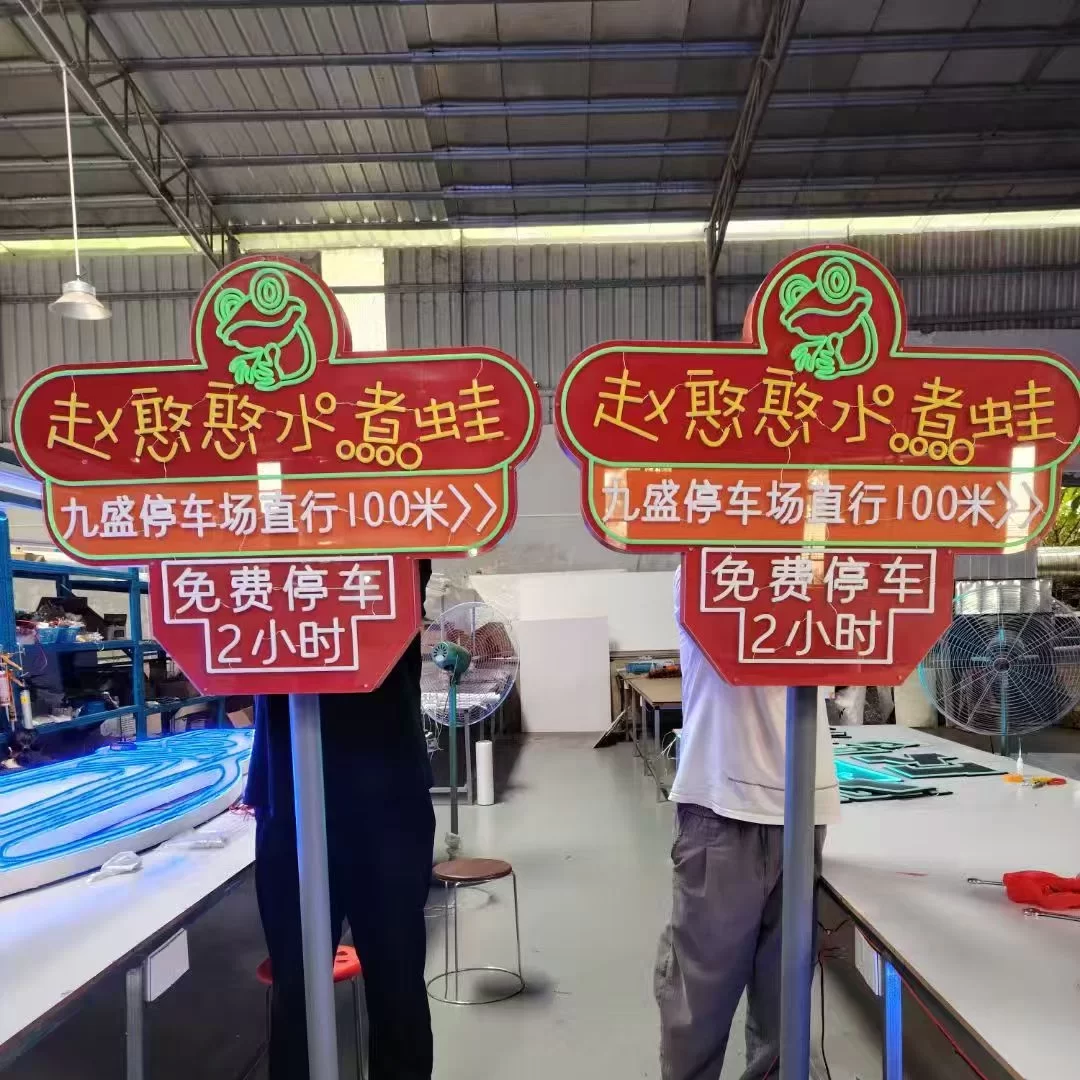
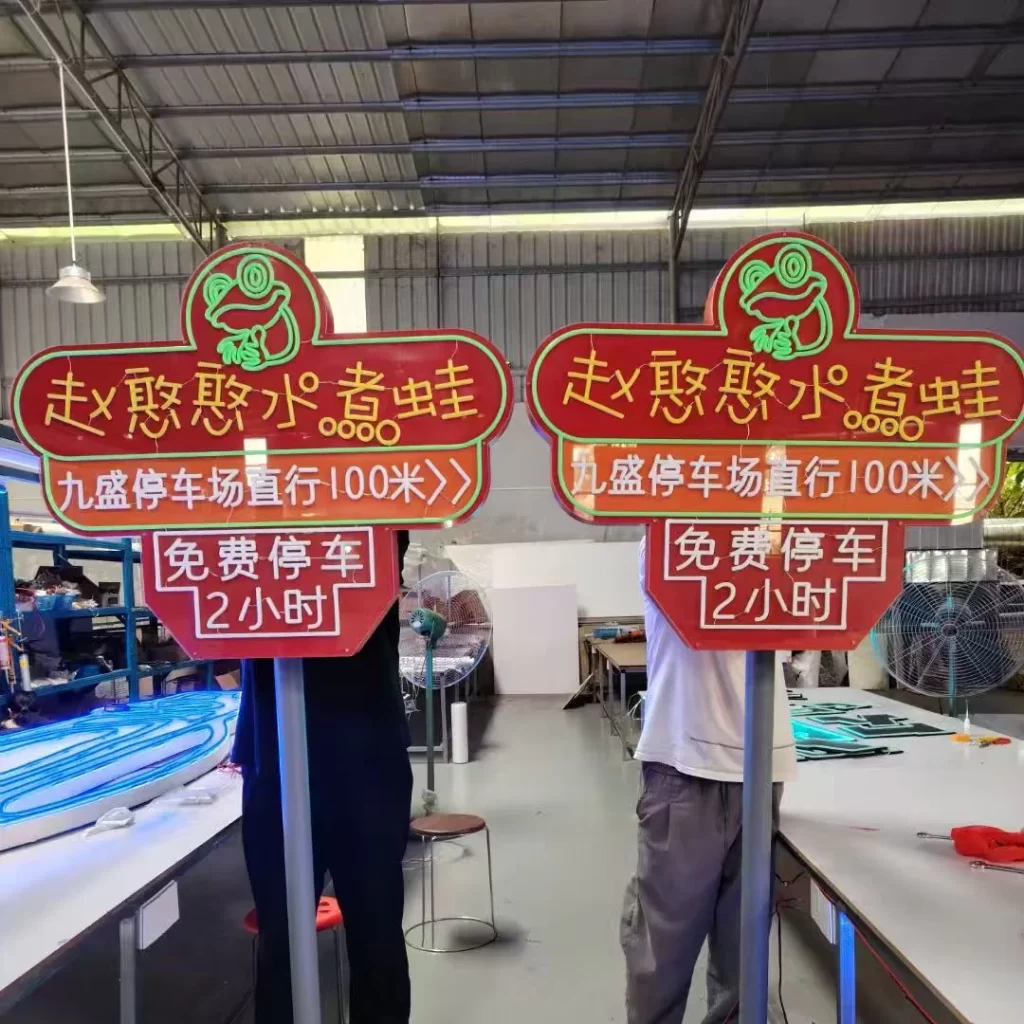
Flexible LED neon (also called LED neon flex or silicone neon) is a strip of surface-mount LEDs encased in a diffusing silicone or PVC tube that bends smoothly. A low-voltage driver (usually 12V or 24V) powers the strip, and the diffuser makes the individual LEDs disappear into a continuous glow. It is built on an acrylic backboard, cut to your logo outline, and plugged into a wall transformer.
Flex neon is the technology behind almost every “neon” sign sold today for commercial interiors.
Power and Heat
Glass neon runs at thousands of volts on the tube side. Transformers hum, electrodes get warm, and a broken tube can expose high voltage. It also draws more total power per meter of glow than LED equivalents.
LED neon runs at safe extra-low voltage (12V or 24V). The transformer lives away from the sign, the tubing runs cool to the touch, and power consumption is typically substantially lower than glass neon per meter of glow. For a sign that runs 12 hours a day, the electricity savings over five years are meaningful.
Fragility and Shipping
This is the single biggest practical difference.
- Glass neon is literally glass. It cracks if it is bumped during installation, leans against a wall crookedly, or ships poorly. One broken tube means a service call from a neon bender who may not be local.
- LED neon flex is silicone over a PCB. It bounces. It can be packed in a carton, shipped by sea or air, and installed by a regular sign technician.
At Hongbo Signage, our flexible LED neon tubing and American-style LED neon signs are packed in export-grade foam and cartons specifically because flex neon survives international shipping the way glass neon cannot. We also build 360° acrylic faux neon signs for customers who want the brightest, most uniform glow with no visible side seams.
Color and Glow Quality
Traditional glass neon has a depth and saturation that LED still cannot fully match. Reds, oranges, and pure warm whites from gas neon have a unique glow that photography loves. Each color requires a different tube and gas mix, which is why multicolor glass signs are expensive.
LED neon can match almost any Pantone color from the silicone diffuser, and can even include RGB color-changing segments. The glow is even, consistent, and modern. For most commercial branding, flex neon looks indistinguishable from glass at normal viewing distance.
Repair and Maintenance
Glass neon repairs require a neon artisan. If a tube cracks or a transformer fails, you are waiting on a specialty trade, often weeks.
LED neon repairs are modular. If one section fails, the failed segment or driver can be swapped by a regular electrician. Drivers are standard off-the-shelf parts.
One edge case worth knowing: if a flex neon sign dies completely, the first suspect is almost always the driver, not the LED strip itself. Before you call the sign broken, swap the driver for a new one of the same voltage and wattage. A $20 driver swap fixes the majority of “dead neon” calls and avoids a service fee. Keep the model number of your driver written on the back of the sign or in your maintenance log, because a matching replacement is what keeps the color temperature identical across repairs.
Cost Comparison
Glass neon often costs roughly 2-3 times more than LED neon for the same size and outline, because the labor of hand-bending is irreducible. As indicative reference ranges for budgeting only:
- A small LED neon word, 0.5-0.8 m wide: roughly $120-$350.
- A medium LED neon logo wall piece, 1.0-1.5 m: roughly $300-$800.
- A large custom LED neon installation, 2 m+: roughly $800-$1,500.
- Equivalent hand-bent glass neon: often roughly 2-3x the LED price.
Actual pricing varies with sign size, materials, finish, color, quantity, fabrication complexity, destination, freight, installation, and local requirements. Use these ranges for budgeting only; project-specific quotation is required.
LED neon also avoids fragile shipping costs and on-site repair calls, which widen the gap over time.
Safety
For commercial interiors, especially where the public, children, or employees touch the sign, LED neon is the safer choice. No high voltage at the tube, no glass to shatter, no hot electrodes. Glass neon should always be mounted out of reach and behind protective guards in any public space.
When Glass Neon Still Wins
Glass neon is still the right call when:
- You specifically want the vintage, authentic diner or bar aesthetic and can afford it.
- The sign is a permanent installation in a controlled space with a glass neon specialist on call.
- You are a museum, set design, or hospitality concept where the artisanal quality is part of the story.
For everyone else, LED neon is the practical answer.
Use Cases Where Flex Neon Shines
LED neon has become the default for:
- Restaurant and bar feature walls.
- Gym and studio branding (see neon-style gym branding for a deeper look at fitness-space applications).
- Beauty, nail, and lash studios.
- Retail window graphics and pop-ups.
- Wedding and event backdrops.
- Co-working lobbies and office culture walls.
For retail storefronts, our LED neon for retail storefronts article walks through outdoor-rated choices and IP ratings.
Outdoor and IP Rating Considerations
Indoor LED neon is not the same product as outdoor LED neon. An interior sign usually has an IP20 or IP30 rating, which means it is fine on a dry wall but will not survive rain, humidity, or direct sun. Outdoor-rated flex neon uses an IP65 silicone sleeve that seals the tubing against moisture, and the driver must also be weather-sealed and mounted in a weatherproof box.
UV exposure is the other outdoor risk. Silicone yellows over years of direct sun, even in flex neon. For a south-facing storefront in a sunny climate, choose a UV-stabilized diffuser and budget for a face refresh at year 3-4 rather than expecting the sign to look brand new at year 7. Indoor neon in a restaurant or office wall has none of these problems, which is why the large majority of flex neon installations live indoors.
Mounting and Dimming Control
LED neon accepts simple dimmers and smart controllers, which is another advantage over glass neon. You can run the sign on a timer, dim it for ambient dinner service, or even program RGB color changes for a retail event. Glass neon is either on or off, and dimming it usually requires a custom transformer. For a business that wants the sign to double as mood lighting, flex neon is the obvious choice.
Longevity Expectations
LED neon modules are rated 30,000-50,000 hours of continuous use, which typically translates to 5-10 years of 8-12 hour daily use before noticeable dimming, depending on usage and driver quality. Glass neon tubes can last 10+ years if untouched, but any physical damage ends that run. For a longer view of sign degradation, our LED neon vs glass neon durability comparison sits inside our broader commercial sign lifespan guide.
What Buyers Should Prepare for a Sign Quote
Whether you lean LED flex or are still comparing, these details get you an accurate neon quote fast:
- Vector artwork in AI/EPS/PDF with fonts outlined, traced to the exact glow path you want.
- Final dimensions: overall width and height, plus the mounting surface and viewing distance.
- Color: Pantone or RGB reference for the glow, and whether static or RGB color-changing is needed.
- Indoor vs outdoor use, so the correct IP rating (IP20/IP30 indoor vs IP65 outdoor) is specified.
- Mounting and power: wall material, whether the driver plugs in, and local voltage.
- Dimming or smart control needs: timer, dimmer, or RGB controller.
- Quantity and quantity of locations, for matched color across signs.
- Required delivery date and shipping destination.

Frequently Asked Questions
Q: Is LED neon as bright as real glass neon?
Very close at commercial viewing distance. Glass neon has a slight saturation advantage in reds and warm whites, but LED flex matches or exceeds it in every other color and is far more consistent over time.
Q: Can LED neon be used outdoors?
Yes, with an outdoor-rated IP65 silicone tube and weather-sealed driver. Indoor-rated flex should not be exposed to rain or direct UV.
Q: How long does LED neon last?
Typical rated life is 30,000-50,000 hours of LED use, which often equals roughly 5-10 years of daily 8-12 hour operation before visible dimming begins, depending on usage and driver quality.
Q: Is glass neon dangerous?
High-voltage glass neon carries a real electrical risk if a tube breaks or wiring is damaged, and shattered glass is a physical hazard. LED neon runs at 12V/24V and is much safer for public-facing spaces.
Q: Why is glass neon more expensive?
Hand-bending glass is a skilled, slow craft. Each letter requires heating, bending, and electrode sealing by a neon artisan. LED neon is a semi-industrial product assembled from stock components.
Conclusion
For almost every commercial buyer today, LED neon is the better neon. It is safer, cooler, shippable, repairable, and a fraction of the cost of hand-bent glass. Reserve glass neon for projects where its specific aesthetic and craft are genuinely the point. Whatever you choose, specify quality silicone diffusers, certified drivers, and a manufacturer who ages-tests every sign before export.
Deciding between LED neon and traditional glass neon for your space?
Hongbo Signage provides OEM/ODM custom signage manufacturing from Guangzhou, China. Get a custom sign quote within 24 hours.