


Warehouse signage is one of the most underrated productivity tools in any industrial facility. A well-planned sign program reduces forklift congestion, speeds up picking and putaway, helps new staff find their way in minutes, and keeps your audit trail clean when regulators walk the floor. Yet many operations treat signs as an afterthought: a handful of hand-painted aisle numbers, a faded “Dock 4” stencil, and a fire exit sticker someone printed on a home printer. That approach stops working the moment your facility grows past two hundred skus or starts running three shifts.
This guide walks through how to think about warehouse signage as a system: facility identification, zoning, aisle and racking signs, loading dock markings, safety and egress signage, and the materials that survive the industrial environment. It is written for facility managers, EHS leads, logistics directors, and procurement teams who are either rolling out a brand-new warehouse, retrofitting an old one, or standardizing signs across multiple sites.
Why a Systematic Warehouse Sign Program Matters
Industrial facilities are large, repetitive, and often poorly lit. Workers and visitors move through them on foot, on pallet jacks, on reach trucks, and in semi-trailers. Without a consistent visual language, people default to guessing, which produces wrong-pick rates, near-misses at intersections, and wasted walking time.
A systematic program does three things at once:
- It identifies the facility itself. Exterior building numbers, gate signs, and perimeter identification signs tell drivers, couriers, fire crews, and inspectors where they are.
- It divides the interior into logical zones. Receiving, storage, pick, pack, shipping, cold chain, hazmat, and mezzanine areas each need their own visual identity.
- It protects people. Safety signs mark hazards, exits, eye-wash stations, restricted areas, and PPE requirements in language that is readable from a moving forklift.
When these three layers are designed together — same materials, same font system, same mounting logic — the facility feels coherent. Bolt them on independently and you end up with mismatched vendors, color codes, and mounting heights on every floor.
Facility Identification: Exterior Building and Gate Signs
The first sign most visitors see is the one outside. For a warehouse campus, exterior identification typically includes the building number, the company name, the gate or dock address, and sometimes a monument-style sign at the entrance. These signs are exposed to rain, UV, road salt, forklift exhaust, and occasional truck mirror bumps, so material choice matters more than it does indoors.
For durable exterior identification, Hongbo Signage commonly recommends aluminum or stainless steel panels with a powder-coated finish. Aluminum is light, corrosion-resistant, and easy to cut and bend; stainless steel adds a premium look and better scratch resistance. Where the building needs to be visible from the road at night, large exterior metal identification signs with integrated illumination or reflective faces are a standard solution. For gated yards and loading yards, factory gate and number identification signs clearly mark which building a driver is approaching before they reach the dock plate.
If your site hosts multiple tenants or operates 24/7 with third-party carriers, consider a modular exterior identification system: a common main sign plus swappable panels for tenant names, shift notices, or temporary event messaging. This avoids reordering the entire sign face every time a tenant changes.
Zone, Aisle, and Rack Identification
Once inside, the most productive sign program is the one that maps directly to your WMS. If your warehouse management system calls a row “A-14-02,” your aisles, cross-aisles, and rack bays should show exactly that code in the same format on every level. Consistency beats clever design here.
A typical zone sign package includes:
- Zone header signs at cross-aisle intersections, identifying the zone letter or name.
- Aisle signs hanging from the ceiling or clipped to uprights, visible from both directions.
- Rack bay signs at the beam level, showing bay and level.
- Floor identification for mezzanines and split-level storage.
- Pick path and dead-end markings to prevent one-way aisles from becoming two-way bottlenecks.
Industrial illuminated wayfinding signs are worth considering in dark freezer zones, low-light mezzanines, or facilities where night-shift lighting is intentionally dimmed to reduce glare on forklift operators. Backlit or edge-lit signs in these environments are readable without additional flashlight use. For ambient-temperature zones, non-illuminated rigid signs on aluminum composite or acrylic backers are usually sufficient and significantly cheaper.
Mounting height is a detail that causes endless retrofit pain. Pick a rule and enforce it: aisle numbers at eye level when standing (roughly 1.5 meters), cross-aisle headers high enough to clear forklift masts, and bay signs flush to the upright so they do not catch pallets. Document the rule in your sign standard so new additions match.
Loading Dock Signs and Yard Marking
The loading dock is where speed and safety collide. Drivers backing up in a yard cannot read a sign that is mounted for a standing person. Dock identification needs to be large, high-contrast, and visible from the approach angle.
Standard loading dock signage includes:
- Dock number signs above each door, often with the door or leveler capacity.
- “Check trailer brakes” and “Chock wheels” reminders.
- Pedestrian walkway stencils and striping.
- Yard speed limit signs.
- Reserved versus general dock bays.
- Hazardous dock doors with restricted-access notices.
For dock doors that see frequent use, rigid signs on a heavy-gauge aluminum backer stand up better than vinyl decals, which peel at the edges within months. Where the dock face is made of curtain or coiled steel, magnet-backed or clamp-mounted signs are easier to install than drilled hardware.
Safety Signage and Regulatory Alignment
No warehouse signage program is complete without the safety layer. Most markets have well-established frameworks for workplace safety signs, and aligning your signs to a recognized standard makes audits smoother and reduces the chance that a regulator flags inconsistent messaging.
Two widely referenced frameworks are worth knowing. In the United States, OSHA workplace safety signage requirements set baseline expectations for hazard communication, while ANSI Z535 safety sign standards govern the design language — colors, signal words, pictograms, and panel layout. If you are exporting or operating multi-site facilities, designing to ANSI Z535 from the start gives you a portable visual language that translates well between sites. For egress specifically, NFPA exit and egress signage requirements govern how exit signs must look and where emergency lighting must function. Hongbo Signage is not a legal advisor, and local code always wins; treat these references as a design starting point, and confirm final wording with your EHS lead or local code consultant before production.
A practical safety sign checklist for most warehouses includes:
- Exit signs above every egress door.
- “Authorized Personnel Only” at restricted areas (electrical rooms, mezzanines, cold chain).
- Forklift and pedestrian separation markings.
- Eye-wash and first-aid station identification.
- Hazmat and flammable storage placards.
- Lockout/tagout station identification.
- PPE-required zones (high-visibility vest, safety glasses, steel toe).
Materials That Survive the Industrial Environment
Industrial signage is not retail signage. A brushed acrylic letter that looks beautiful in a showroom will scratch, yellow, and delaminate in a warehouse bay within a few years. The right material depends on exposure:
- Aluminum composite panels are the workhorse of interior and sheltered exterior signs. Light, flat, printable, and rigid enough for ceiling hanging.
- Solid aluminum with powder coating is the choice for exterior building numbers and dock signs. Powder coat is far more durable than painted or vinyl finishes.
- Stainless steel is used when you want a premium look at the gate or lobby, or in washdown areas where corrosion is a concern.
- Acrylic and polycarbonate are used for illuminated faces and interior panels where clarity matters.
- Vinyl and film are reserved for floor marking and short-term messages, not permanent identification.
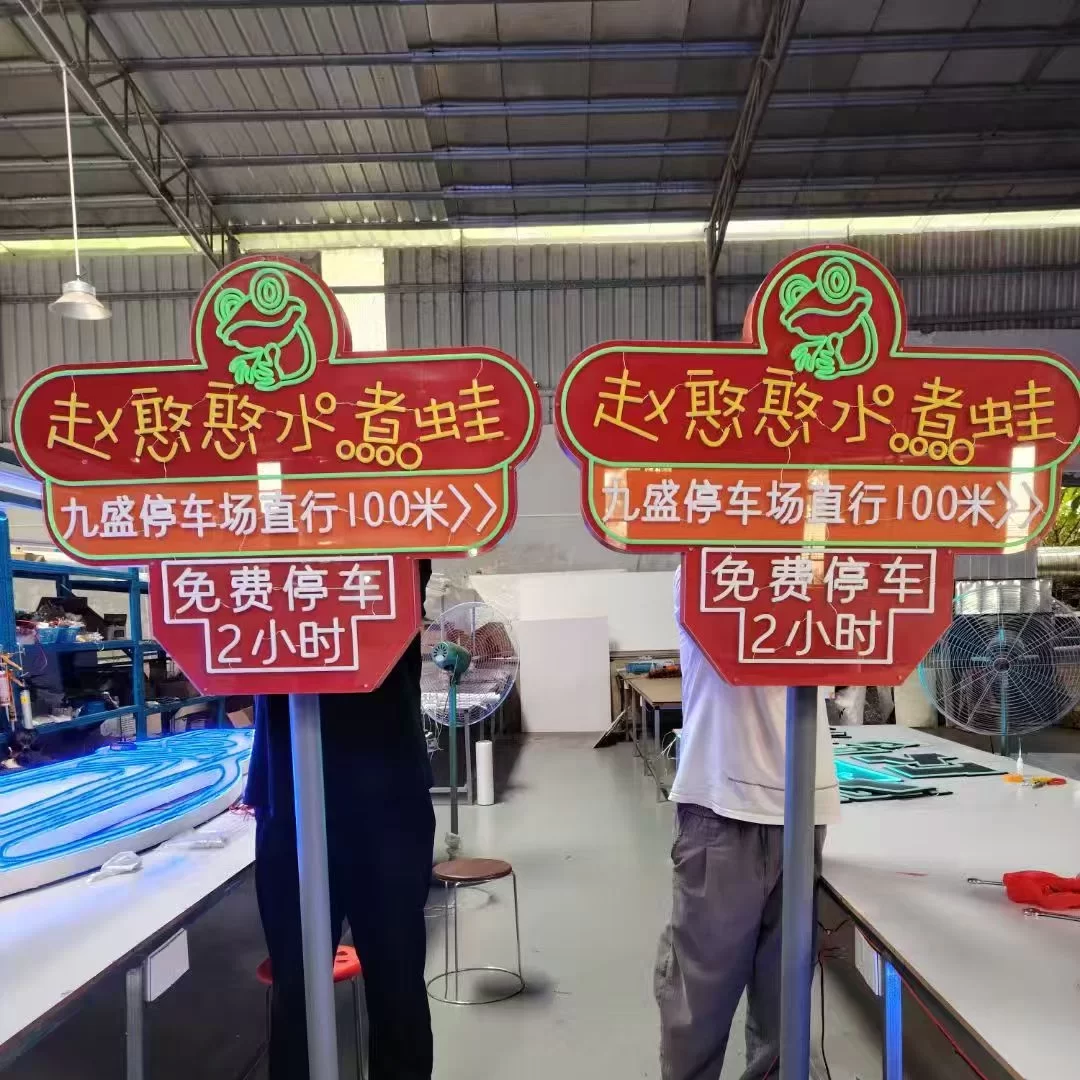
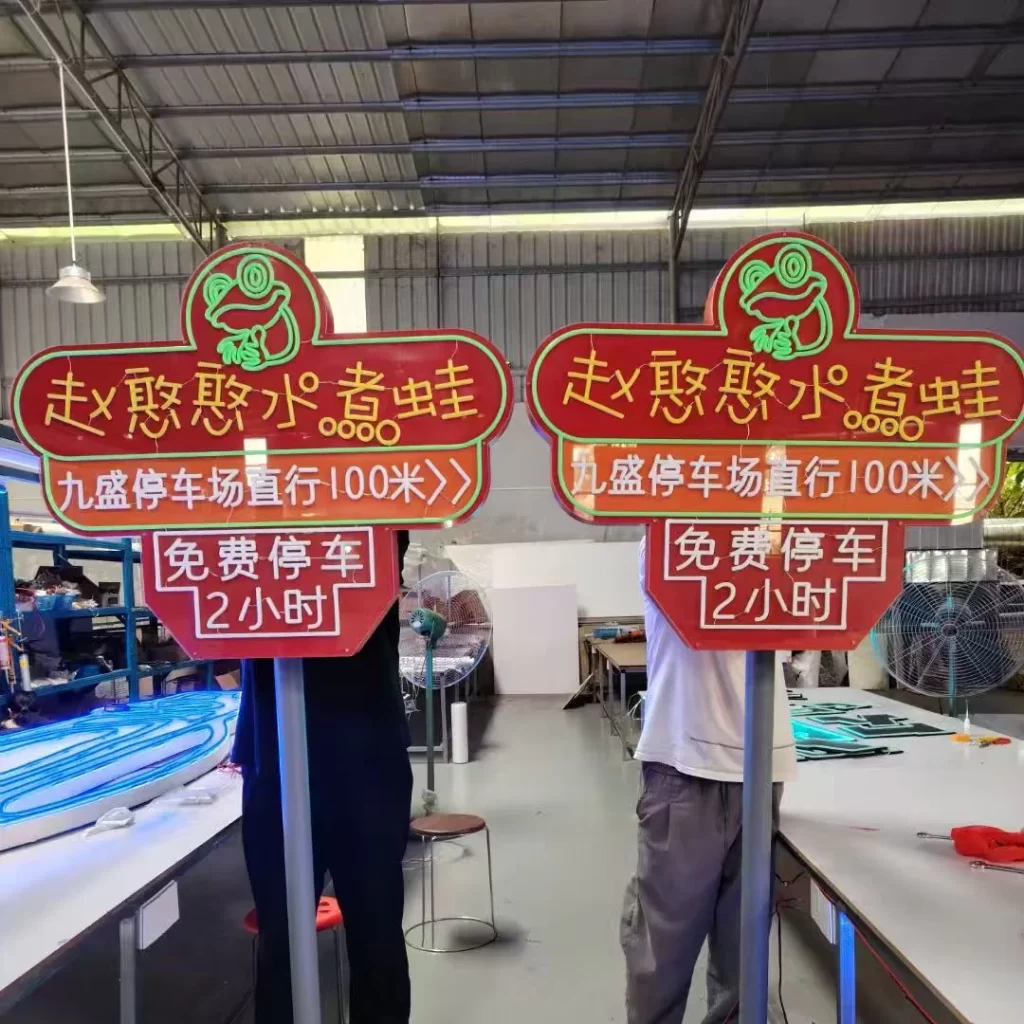
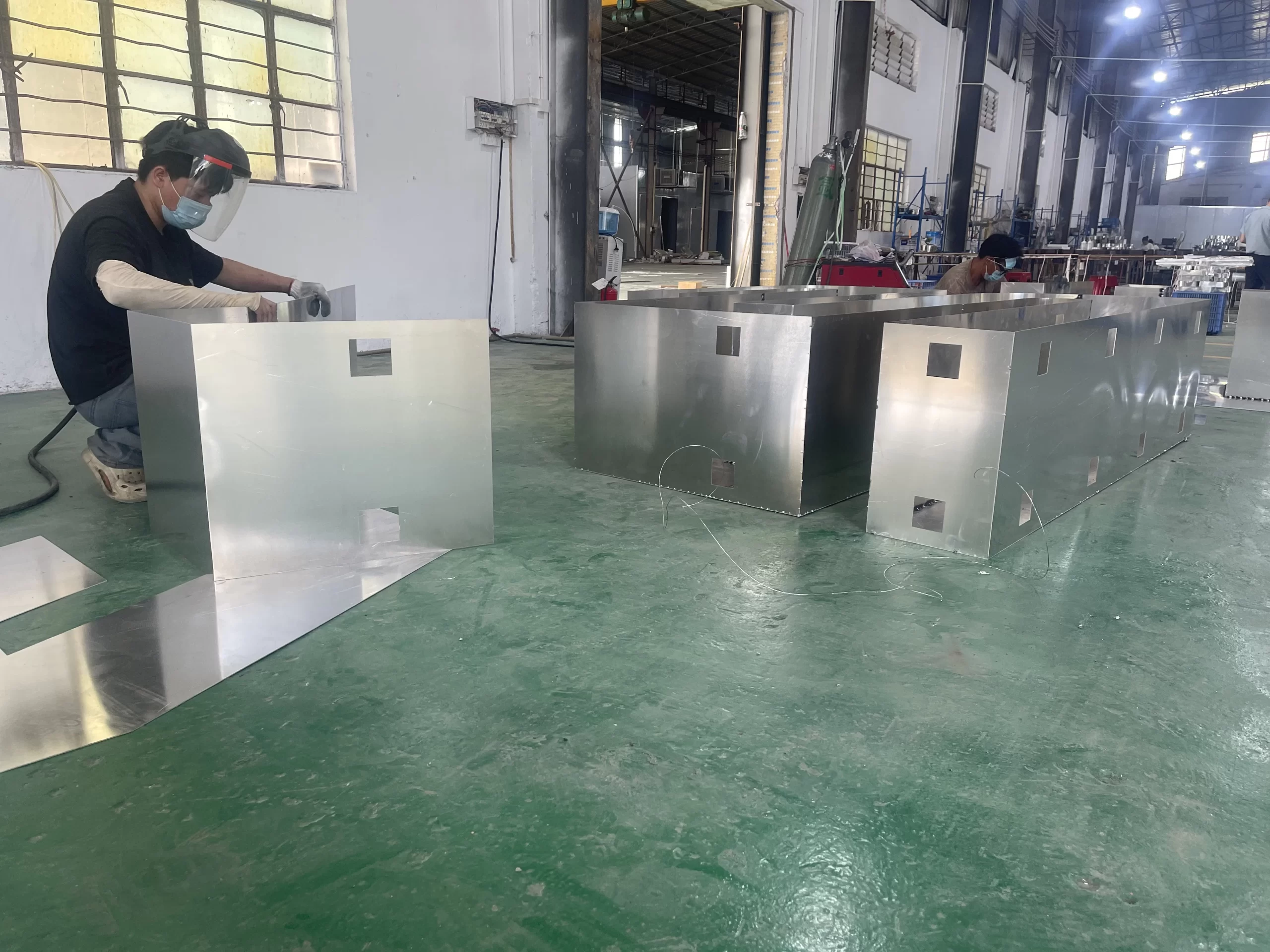
Production here typically combines laser cutting for precision metal and acrylic shapes, bending and welding for structural components, powder coating for a consistent exterior finish, and final assembly with LED modules where illumination is required. Every sign batch goes through an aging test before packing so that illuminated signs do not arrive with a dead module.
MOQ, Lead Time, and Export Shipping
For a typical single-facility rollout, a warehouse sign program might run from a few dozen signs (small retrofit) to several hundred (new facility or multi-site chain). Because signs are custom-fabricated to your artwork and mounting hardware, the minimum order quantity is usually low enough to support a single-warehouse order, while larger chains benefit from standardized specs across all sites.
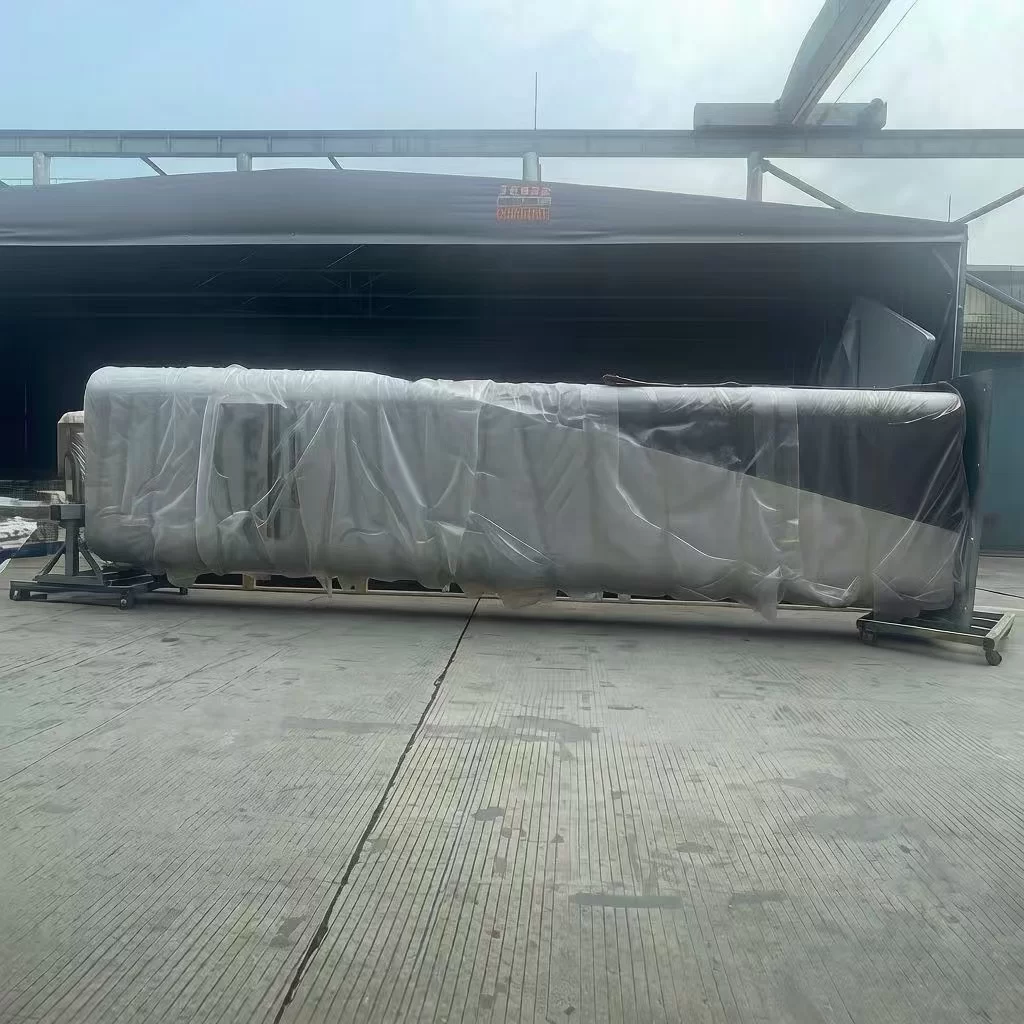
Lead time for custom industrial signage is typically 10-25 working days after artwork approval, depending on quantity, material complexity, and whether illumination is required. Bulk orders ship most economically by sea, either LCL for smaller batches or FCL for full container loads. Air freight is available for urgent replacements but adds substantial cost. Signs are nested in foam, corner-protected, and strapped to pallets so powder-coated surfaces do not rub through in transit. On arrival, a basic QC check — count signs, verify serial numbers, and inspect a sample face — catches most shipping issues before installation.
If you are planning a multi-site rollout, it is worth designing the sign standard first, then ordering production in waves. A pilot site validates mounting hardware and installation crews before you commit the full order. For budgeting guidance across different sign types and materials, our guide on budgeting industrial signage walks through the main cost drivers.
What Buyers Should Prepare for a Sign Quote
Before requesting a warehouse sign quote, gather a few project-specific inputs so the quotation reflects your real facility rather than a generic estimate:
- A current facility or rack layout map showing zones, aisles, cross-aisles, rack bays, mezzanines, and the loading dock face.
- A list of hazard and restricted areas (hazmat storage, cold chain, electrical rooms, eye-wash stations) that need safety signage.
- Planned mounting heights for aisle, cross-aisle, and bay signs, plus forklift mast clearance limits.
- Exterior exposure notes: coastal salt air, freeze-thaw cycles, UV load, and any road-salt or forklift-exhaust exposure.
- A draft sign standard: zone codes that match your WMS, approved color codes, and the font system to reuse across sites.
- Installation and access details: ceiling hanging points, mast or bracket availability, and whether local crews will mount signs.
- Your expected wave rollout schedule if you operate multiple sites, so production can be quoted in batches.

Frequently Asked Questions
Q: What materials are best for warehouse signs that see forklift traffic?
Aluminum composite or solid aluminum with a powder-coated finish is the standard choice. They are rigid, scratch-resistant, and do not chip the way painted MDO or vinyl faces do. For illuminated signs in low-light zones, acrylic or polycarbonate faces over aluminum housings balance durability with light transmission.
Q: How many aisle and bay signs do I need for a typical warehouse?
It depends on rack layout, but a common rule of thumb is one aisle identifier per cross-aisle intersection, one bay identifier per rack bay, and a zone header at every zone change. A 50,000-square-foot distribution center often runs 150-400 individual sign pieces. Your sign supplier can help you convert your rack layout into a sign bill of materials.
Q: Should warehouse safety signs follow OSHA or ANSI Z535?
OSHA sets the baseline requirements for what must be communicated, while ANSI Z535 governs how the signs look — colors, signal words, pictograms, and panel layout. Many facilities design to ANSI Z535 because it is more prescriptive and makes audits smoother. Always confirm final wording with your local EHS or code consultant, as local jurisdiction may override.
Q: What is the typical lead time for a custom warehouse sign order?
For most OEM/ODM orders, production lead time is 10-25 working days after artwork approval. Larger or illuminated orders tend toward the longer end. Add transit time: sea freight typically takes several weeks door-to-door depending on destination, while air freight is days but more expensive.
Q: Can I reorder signs later to match an existing batch?
Yes, provided you keep your artwork, Pantone values, and mounting hardware specs on file. The best practice is to save the production file from the initial order so that reorders match exactly. Hongbo Signage stores approved artwork so that repeat orders for chain facilities remain visually consistent across sites.
Conclusion
A warehouse signage program is not a stack of signs — it is a coordinated system that identifies the facility, organizes the floor, and protects the people working in it. Exterior signs mark the building and gates; interior signs divide zones, aisles, and bays; loading dock signs keep trucks and pedestrians apart; and safety signs anchor the program to recognized standards. Choosing durable materials (aluminum, stainless steel, powder coat, quality acrylic) and a manufacturer with repeatable production, aging-tested QC, and export-grade packaging means your signs will survive the industrial environment for years rather than months. For a single new facility or a multi-site chain, design the system first, then manufacture in waves.
Mapping out a signage package for your warehouse or industrial site?
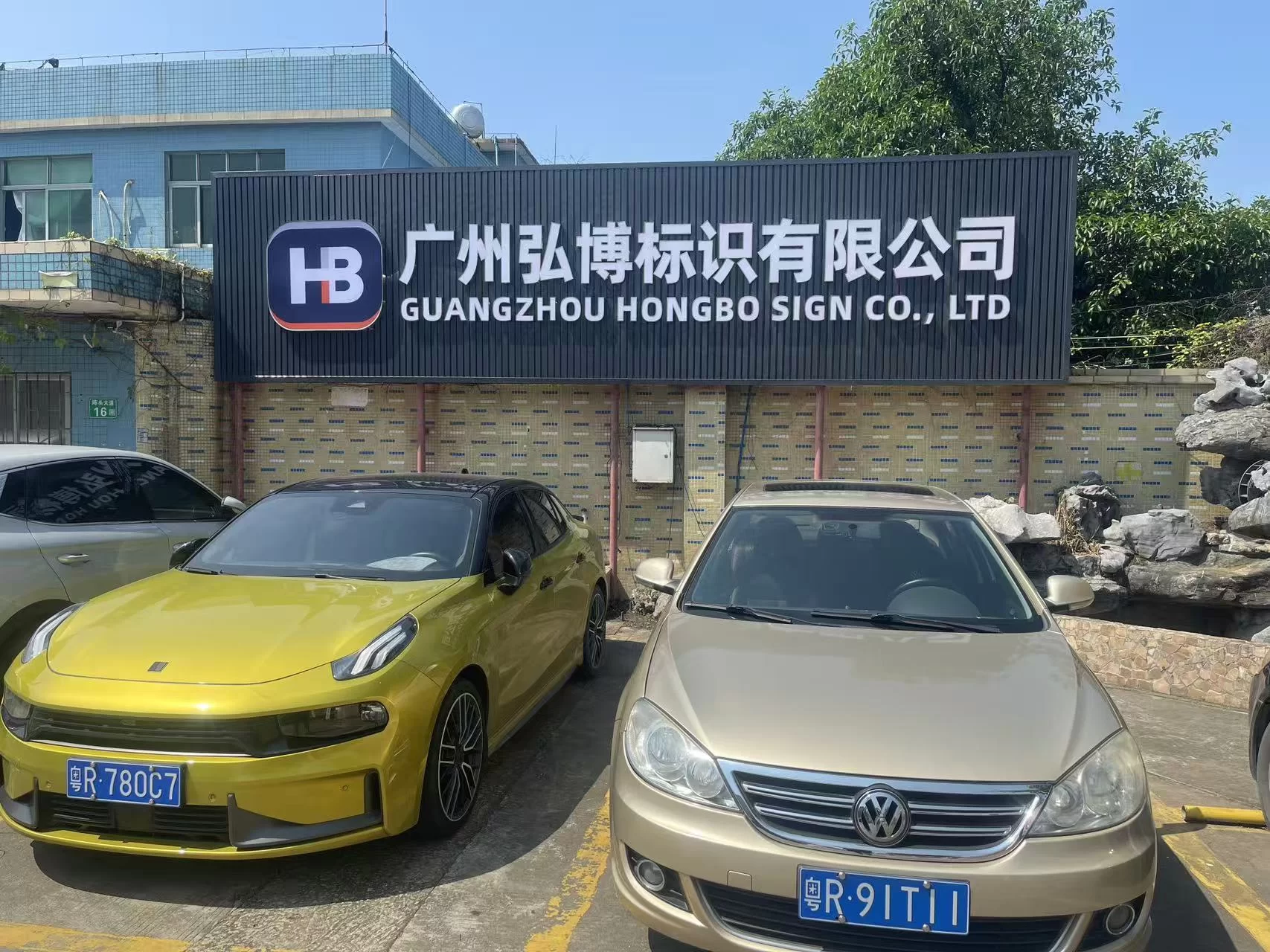
Hongbo Signage provides OEM/ODM custom signage manufacturing from Guangzhou, China. Get a custom sign quote within 24 hours.