

When a retail brand, restaurant, gym, or medical clinic chooses a storefront sign, the decision almost always narrows to two contenders: channel letters and lightbox signs. Both are illuminated, both can be custom-made to your logo, and both have been the standard commercial building-block for decades. Yet they look different, behave differently at night, cost differently, and fit different building types.
This side-by-side guide compares channel letters vs lightbox signs across visibility, day and night appearance, cost, durability, maintenance, and best-fit use cases. The goal is to match the sign to your facade, your brand, and your budget rather than defaulting to whatever your sign salesperson pushes first.
What Each Type Actually Is
Channel letters
Channel letters are individual three-dimensional letters or logos mounted directly to the wall. Each letter is a self-contained can made of aluminum or stainless steel, with a translucent acrylic face (front-lit) or an open back (backlit/halo). Internal LED modules light the face or cast a halo around the letter. There is no surrounding box; the wall shows through between letters.
Lightbox signs
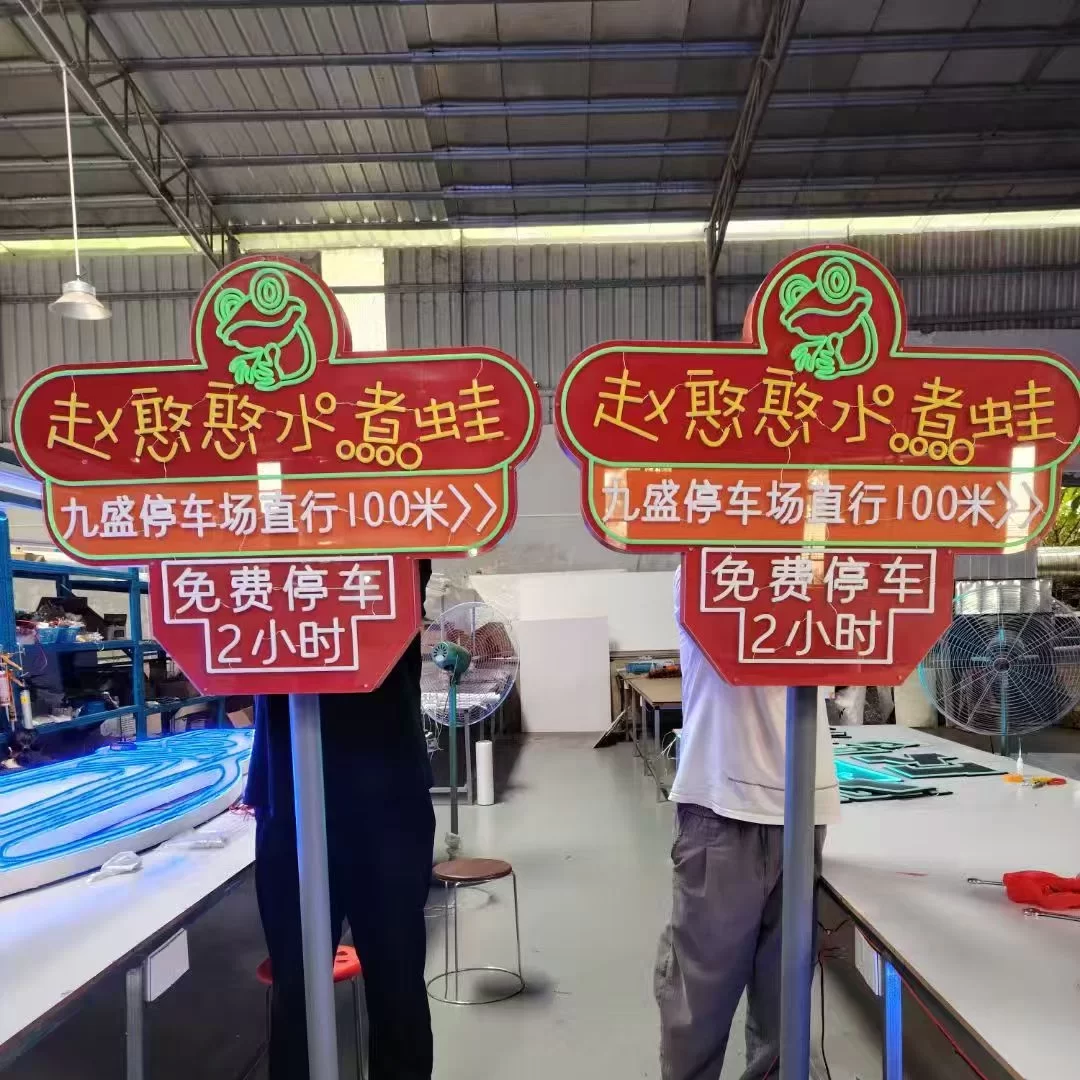
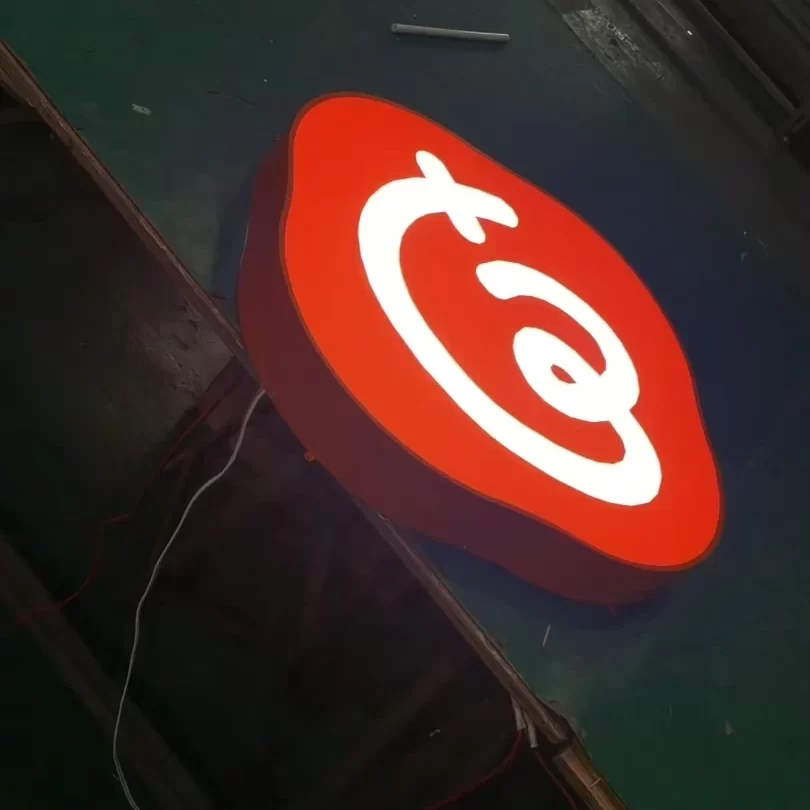
A lightbox sign is a sealed cabinet with an illuminated face. The cabinet is typically aluminum or galvanized steel, the face is acrylic or fabric, and LED modules inside diffuse light evenly across the whole panel. A lightbox can be single-sided wall-mounted, double-sided projecting, or built into a pylon monument.
Visibility: Daytime and Nighttime
Daytime appearance
Channel letters read as premium, dimensional branding. The brushed stainless steel returns, metal finishes, and floating mountings look architectural and are the default for banks, auto dealers, and upscale retail. They also adapt to brick, stone, and stucco facades without overwhelming them.
Lightboxes read as a flat graphic panel. In daylight they are fine, but they look like a panel stuck on the wall rather than built into the building. They tend to suit mall corridors, indoor directories, and fast-food branding where a big colored rectangle matters more than architecture.
Nighttime appearance
At night, both types come alive, but differently.
- Front-lit channel letters glow from the face, producing bold, legible lettering that reads from a block away.
- Backlit (halo) channel letters cast a warm glow onto the wall behind, which is considered the most luxurious look in hospitality and modern retail.
- Lightboxes light up the entire panel evenly, so a logo or image on the face glows as one unit. This is excellent for photographic branding or complex graphics that cannot be cut into letters.
For pure nighttime legibility on a street-facing storefront, front-lit channel letters usually win. For a logo with detailed artwork, a lightbox wins because it can print almost any image.

Cost Comparison
Cost is where buyers most often ask the wrong question. Channel letters generally cost more per letter than a lightbox per square meter, but the comparison is not apples-to-apples because a channel-letter set and a lightbox are not the same visual size.
As indicative reference ranges for budgeting only:
- A set of mid-sized front-lit channel letters: roughly $600-$1,800.
- Brushed or mirror stainless steel channel letters: roughly $1,200-$3,500.
- A slim LED lightbox, 1.0-2.5 m wide: roughly $400-$1,500.
- A large double-sided lightbox, 2.0-4.0 m wide: roughly $1,500-$5,000.
Actual pricing varies with sign size, materials, finish, lighting, quantity, fabrication complexity, destination, freight, installation, and local requirements. Use these ranges for budgeting only; project-specific quotation is required.
For a deep breakdown of these numbers, see our full custom sign pricing guide. In short, a lightbox is usually the more economical choice for a given visual area, while channel letters buy premium architectural credibility.
Durability and Materials
Both types are designed for outdoor use, but their failure modes differ.
- Channel letters can leak around face gaskets if poorly sealed, and individual LEDs can fail inside a letter. Repairs require opening that letter.
- Lightboxes have a larger sealed cavity. Their main weak points are the face panel (acrylic yellows, fabric stretches) and door gaskets. A well-built wall-mounted metal sign box sealed with foam gaskets and stainless hardware will outlast a cheap lightbox by years.
At Hongbo Signage, we build both front-lit channel letters and slim LED lightbox signs with 304 stainless hardware, branded LED modules rated 30,000-50,000 hours, and aging checks before export. Material choice matters more than category: a well-built lightbox will outlast a poorly built channel letter set every time.
Maintenance and Repair
Channel letters: if one letter fails, a technician can remove and service that letter individually, which is convenient. LED drivers are usually housed in a raceway or electrical box nearby.
Lightboxes: a faulty LED is buried inside a sealed cabinet, which usually means opening the door, reaching in, and swapping modules. Face replacement is a bigger job than swapping a single letter.
For a long-term view of expected service life, see our guide on how long commercial signs last. For a deeper dive into the two lighting styles inside channel letters themselves, read our front-lit vs backlit channel letters comparison.
Best-Fit Use Cases
Choose channel letters when:
- Your storefront is on a busy street and needs strong nighttime legibility.
- Your brand relies on typography rather than photographic imagery.
- You want a premium, architectural look on brick, stone, or metal panel.
- You run a franchise and need identical dimensional letters across locations.
Choose a lightbox when:
- Your logo contains detailed artwork, gradients, or photos.
- You are in a mall, airport, or indoor corridor where projecting letters are restricted.
- You want the lowest cost per square meter of illuminated branding.
- You need a double-sided projecting sign for a narrow street.
Street Frontage vs Mall / Indoor
Street-facing retail and automotive dealerships almost always choose front-lit or backlit channel letters because they read well at 50-100 meters and look premium. Mall tenants and food-court operators more often choose lightboxes or slim LED boxes, because mall rules constrain projection depth and interior sightlines favor a flat, evenly lit panel.
For franchise programs, the choice is usually made once and repeated. Many chains standardize on channel letters for exterior facades and lightboxes for interior directories. Our retail and franchise signage options guide explores this mixed approach in more detail, including how chains handle regional climate differences and permit variations across states.
Installation Complexity
Channel letters mount individually with standoffs and concealed wiring through a raceway. Each letter must be wired, sealed, and leveled. A 10-letter sign can take a day or more for two installers.
Lightboxes mount as one cabinet. The box goes up, power is connected, and the face is clipped on. Installation is faster and usually cheaper, which partially offsets any product price difference.
Can You Mix Channel Letters and Lightboxes?
Yes, and many strong storefronts do. A common hybrid is a lightbox cabinet for the main brand panel, with raised channel letters or a metal logo mounted on top for daytime depth. This gives you the large illuminated graphic area of a lightbox plus the premium dimensional feel of channel letters. It also works well when your logo mixes a detailed image with a wordmark: print the image on the lightbox face and cut the wordmark as separate letters.
If you are designing a brand-new facade, ask your manufacturer to propose a hybrid layout. The added cost is usually modest compared with running two separate signs, and the result reads as a designed system rather than a catalog product.
What Buyers Should Prepare for a Sign Quote
Whichever direction you lean, a focused brief helps the manufacturer quote the right type. Have these ready:
- Vector artwork in AI/EPS/PDF with fonts outlined, so channel-letter cuts or lightbox face prints are priced accurately.
- Final dimensions: overall width and height, letter heights, and the viewing distance from the street.
- Facade details: brick, stone, ACM, glass, or stucco, plus any projection-depth limits (common in malls).
- Material and finish: acrylic face color (Pantone), stainless returns, and whether you want front-lit, backlit halo, or a printed lightbox face.
- Quantity and rollout plan: single store or multi-location, so bins and finishes can be matched across signs.
- Lighting and color temperature: cool or warm white, or branded LED color.
- Mounting and power: raceway vs concealed wiring, wall standoff, and local voltage.
- Required delivery date and shipping destination.
Frequently Asked Questions
Q: Are channel letters more expensive than lightboxes?
Per unit, yes for a typical storefront set, but not always per square meter. A lightbox costs less per square meter of illuminated area, while channel letters cost more per letter but deliver a premium architectural look.
Q: Which is brighter at night, channel letters or a lightbox?
Well-built channel letters can be brighter per letter because LED modules sit close to the face. Lightboxes diffuse light across a larger area, so they look even but less punchy per point.
Q: Can I get channel letters in my exact brand font and color?
Yes. Both channel letters and lightboxes are fully customizable. Channel letters use Pantone-matched acrylic faces and painted metal returns; lightboxes can print or apply vinyl to the acrylic or fabric face to match your brand colors exactly.
Q: Which lasts longer outdoors?
When built from 304/316 stainless hardware, UV-stable acrylic, and quality LED drivers, both types commonly last around 8-12 years, depending on usage, climate, and maintenance. Cheap versions of either can fail in 3-4 years. Build quality matters more than the category.
Q: Do I need a permit for either sign type?
Almost always yes for exterior illuminated signage. Permit fees and review timelines are set by your local municipality and apply equally to channel letters and lightboxes.
Conclusion
Channel letters and lightboxes are not better or worse; they are optimized for different goals. Choose front-lit or halo channel letters when your priority is street-level legibility, premium architecture, and typographic branding. Choose a lightbox when you need a large, cost-effective illuminated panel, photographic artwork, or an indoor mall application. The best sign programs use both strategically across a chain. Either way, work with a manufacturer that controls laser cutting, welding, painting, assembly, and aging testing in-house so the sign you approved in the drawing is the sign that ships.
Still deciding between channel letters and lightbox signs for your storefront?
Hongbo Signage provides OEM/ODM custom signage manufacturing from Guangzhou, China. Get a custom sign quote within 24 hours.