



The Role of Signage in Auto Dealerships
Auto dealerships are unique retail environments that combine large outdoor inventory displays, expansive showrooms, service departments, and customer amenities into a single, high-traffic facility. In this complex environment, signage plays a critical role in attracting customers, guiding them through the purchase and service journey, promoting vehicles and specials, and creating a professional, branded experience that builds trust and drives sales. From the roadside pylon sign that catches a passing motorist’s eye to the window sticker on a vehicle in the showroom, from the service department directional signs to the promotional banners lining the inventory lot, every sign in a dealership contributes to the customer experience and the dealership’s bottom line.
Auto dealership signage is also subject to specific requirements and challenges, including brand standards from automobile manufacturers (which often dictate the design, colors, and placement of dealership signage), local sign codes and zoning regulations (which may limit the size, height, and number of signs on a dealership property), and the need to frequently update promotional signage (sales events, manufacturer incentives, vehicle inventory) in a fast-paced retail environment. Managing a comprehensive dealership signage program requires careful planning, consistent branding, and an understanding of how signage influences customer behavior at each touchpoint—from the roadside to the showroom to the service drive.
This guide provides a comprehensive overview of auto dealership signage, covering all major sign types and applications, design considerations, regulatory and brand requirements, material selection, and best practices for creating a high-impact, conversion-focused dealership signage program. Whether you are building a new dealership, renovating an existing facility, or upgrading signage for a multi-location dealership group, this guide will help you understand what is needed and how to maximize the return on your signage investment.
Exterior Dealership Signage: Roadside Visibility and Brand Identity
The exterior of an auto dealership is the customer’s first impression, and exterior signage is critical for attracting passing motorists, identifying the dealership and brands, and creating a professional, welcoming appearance. Exterior dealership signage includes several types, each serving a specific purpose in the customer journey.
Roadside Pylon and Monument Signs
The roadside pylon sign (also called a freestanding sign, pole sign, or dealer sign) is the primary brand identification and visibility element for an auto dealership, typically positioned near the road to attract passing motorists and communicate the dealership’s name, brands, and key promotions. Auto dealership pylon signs are typically tall (30–80 feet high) to maximize visibility from a distance, particularly in high-speed highway or arterial road locations, and may include the dealership name, automobile brand logos (e.g., Ford, Toyota, BMW), a digital LED display for promotions and inventory, and (for multi-brand dealerships) separate brand panels.
Key design considerations:
- Brand compliance: Automobile manufacturers typically have strict brand standards for dealership signage, including specific logo versions, colors, fonts, dimensions, and placement. Always obtain brand approval and follow the manufacturer’s signage guidelines when designing pylon signs. Many manufacturers provide pre-approved sign designs or require signage to be produced by approved sign companies.
- Height and visibility: Pylon sign height should be determined based on the distance from the road, traffic speed, surrounding obstructions (trees, buildings, other signs), and local height regulations. Higher signs provide greater visibility from a distance, particularly in high-speed locations, but may be restricted by local sign codes. Always verify local height limits and obtain the necessary permits. Our guide to pylon signs and pole signs provides detailed information on pylon sign design, construction, and regulations.
- Digital LED display integration: Many dealership pylon signs include a digital LED display (electronic message center) for promoting sales events, manufacturer incentives, current inventory, and service specials. Digital displays allow real-time content updates and can significantly increase the sign’s marketing value. Choose a display with appropriate resolution (pixel pitch) for the viewing distance, and ensure it complies with local regulations on brightness, animation, and content. Our guide to 2026 LED signage trends provides additional information on digital LED displays.
- Multi-brand and multi-franchise signs: For dealerships representing multiple brands (e.g., a combined Ford/Lincoln dealership, or a multi-franchise used car superstore), the pylon sign should include all brand logos in a balanced, readable layout, with the primary brand(s) most prominent. Follow manufacturer brand standards for the relative size and placement of each logo.
- Illumination: Pylon signs for auto dealerships are typically illuminated for 24/7 visibility, using internal LED illumination for sign faces and brand logos, plus the digital LED display. Ensure the illumination is uniform, energy-efficient, and compliant with local lighting regulations (brightness limits, hours of operation, light pollution).
- Structural engineering: Auto dealership pylon signs are large, tall, freestanding structures that must be engineered to withstand local wind loads (per ASCE 7 or local building code), including wind gusts and seismic activity (in earthquake-prone areas). A licensed structural engineer should design the foundation and structure, and the sign should be installed by a qualified professional.
Building-Mounted Dealership Signs
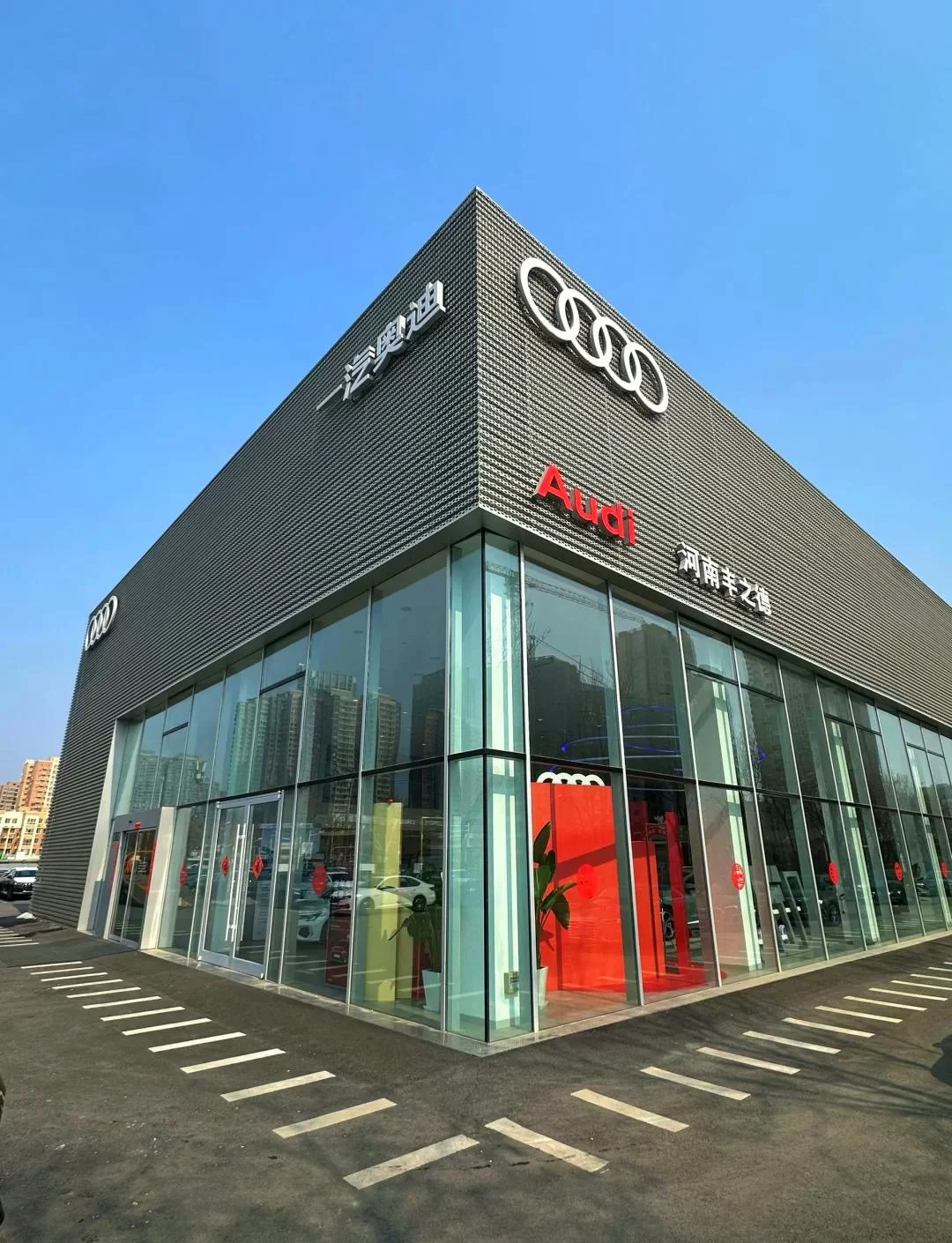
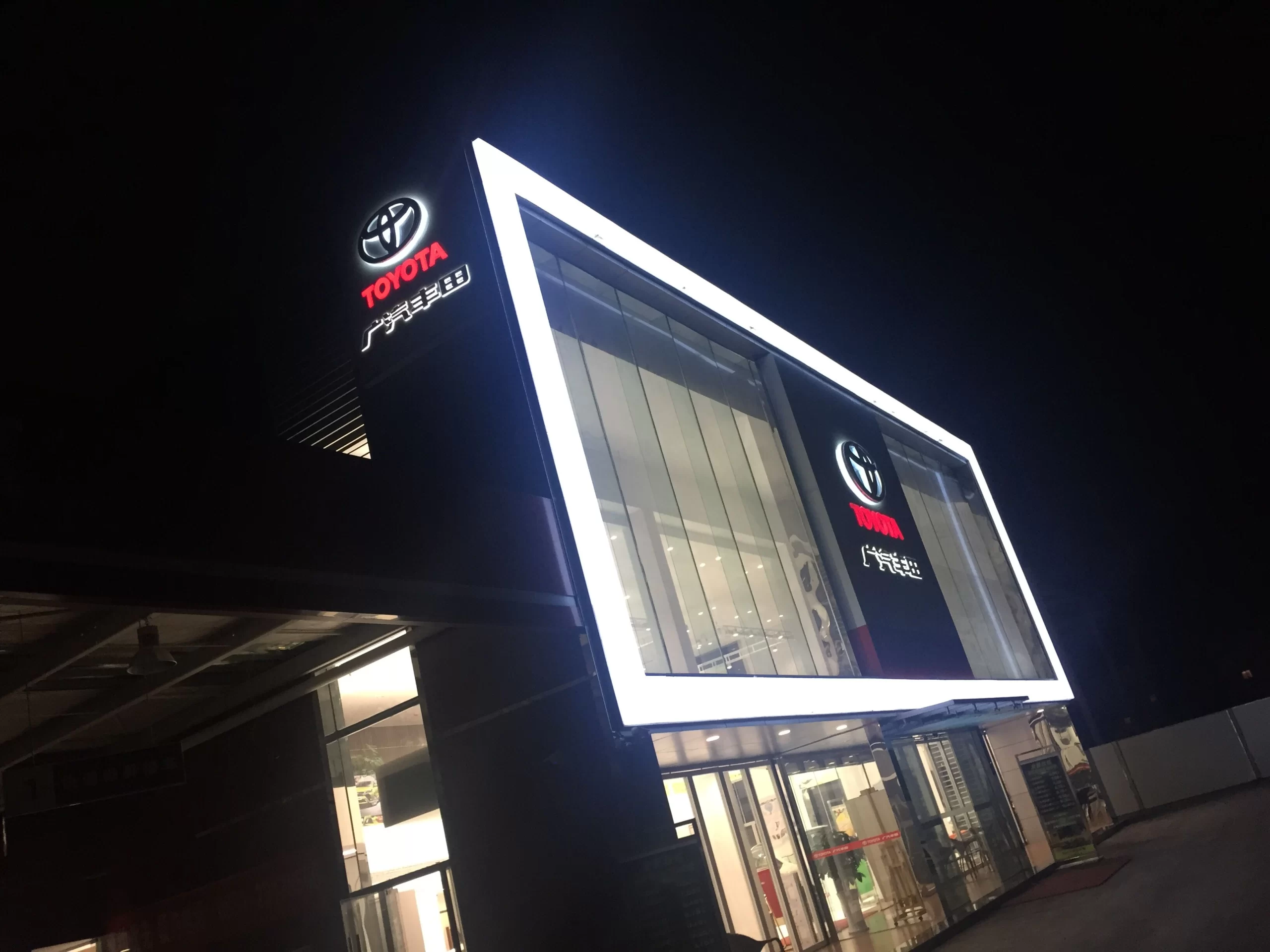
In addition to the roadside pylon sign, auto dealerships typically have building-mounted signs on the showroom and service department buildings, identifying the dealership name, brand logos, and key departments. Building-mounted signs may include illuminated channel letters (the dealership name and brand logo), push-through letters, or light box signs, mounted on the building facade above the showroom entrance or service drive.
Key design considerations:
- Brand consistency: Building-mounted signs should match the pylon sign and other dealership signage in materials, colors, fonts, and illumination, creating a cohesive, professional brand identity across the entire facility.
- Showroom vs. service department identification: Clearly identify the showroom entrance (for vehicle sales) and the service department entrance (for service, parts, and repairs) with separate building-mounted signs, helping customers navigate to the correct department. Service department signs may include “Service,” “Parts,” “Service Drive,” or “Quick Lane” (or manufacturer-specific service brand names).
- Illumination: Building-mounted signs are typically illuminated for nighttime visibility, using front-lit channel letters, backlit/halo-lit letters, or push-through letters. Ensure the illumination type and color temperature match the pylon sign and other dealership signage for consistency. Our guide to push-through letters provides additional information on illuminated letter options.
- Building architecture integration: Building-mounted signs should be designed to complement the building’s architecture, with appropriate size, placement, and materials that enhance rather than detract from the building’s appearance. For new construction, involve the architect in the signage design process to ensure integration with the building facade.
Inventory Lot and Promotional Signage
The vehicle inventory lot is one of the most important marketing areas of an auto dealership, and effective lot signage can significantly increase vehicle visibility, customer engagement, and sales. Inventory lot and promotional signage includes several types:
- Vehicle window stickers / buyer guides: Every vehicle in the inventory (new and used) must have a window sticker (also called a buyer’s guide or Monroney label for new vehicles) displaying the vehicle’s price, features, specifications, fuel economy, and (for used vehicles) the warranty status and “As Is” disclosure. Window stickers are required by federal law (the FTC’s Used Car Rule and the Automobile Information Disclosure Act) and must be displayed in a visible location on the vehicle’s window. While window stickers are typically provided by the manufacturer (for new vehicles) or printed by the dealership (for used vehicles), they are an important part of the dealership’s signage program and should be consistent, professional, and compliant.
- Vehicle price / feature signs: In addition to the required window sticker, many dealerships place additional price or feature signs on vehicles (e.g., “Certified Pre-Owned,” “Low Mileage,” “One Owner,” “Special Financing”) to highlight key selling points and attract customer attention. These signs may be hang tags (hanging from the rearview mirror), window clings, or small A-frame signs placed near the vehicle. Ensure these signs are professional, consistent with the dealership’s brand, and do not obscure the required window sticker or driver visibility.
- Lot banners and pennants: Promotional banners and pennants are commonly used in dealership inventory lots to create a festive, high-energy atmosphere and draw attention to sales events, manufacturer incentives, or special promotions. Banners may be hung between light poles, across the lot entrance, or along the building facade, and may include messages such as “Year-End Sale,” “0% Financing,” “Used Car Tent Sale,” or “Memorial Day Sales Event.” Ensure banners are professionally designed, durable, and securely mounted, and that they comply with local sign regulations (temporary sign permits, size limits, duration limits).
- Lot directional and informational signs: Directional signs guide customers through the inventory lot, identifying different vehicle categories (e.g., “New Cars,” “Used Trucks,” “SUVs,” “Certified Pre-Owned,” “Electric Vehicles”) and helping customers find specific vehicles or departments. Informational signs may include lot rules (e.g., “No Smoking,” “Speed Limit 5 MPH,” “Customer Parking Only”), hours of operation, and contact information.
- Inflatable figures and promotional displays: Some dealerships use inflatable figures (e.g., brand mascots, cartoon characters, giant animals) or other promotional displays (e.g., tents, flags, balloons) to attract attention and create a festive atmosphere during sales events. While these can be effective for short-term promotions, they should be used sparingly and professionally, as excessive or tacky promotional displays can detract from the dealership’s brand image and may be restricted by local sign regulations or manufacturer brand standards.
Entrance and Directional Signage
Auto dealerships are large, complex facilities with multiple entrances (showroom, service, parts, body shop), and effective entrance and directional signage is essential for guiding customers to the correct location and creating a smooth, stress-free experience. Entrance and directional signage includes:
- Entrance identification signs: Clearly identify each entrance (Showroom, Service, Parts, Body Shop, Customer Parking) with building-mounted or freestanding signs, visible from the road and parking lot.
- Roadside directional signs: Signs at the property entrance and along the access road guiding customers to the correct department (e.g., “Showroom →,” “Service ←,” “Parts & Service Entrance”).
- Parking lot directional signs: Signs within the parking lot guiding customers to customer parking, handicap parking, showroom parking, service drop-off, and employee parking (clearly separated from customer parking).
- Service drive directional signs: Signs guiding customers into the service drive, identifying service lanes (e.g., “Quick Lube,” “Service Advising,” “Express Service”), and indicating where to stop for service advising.
- Traffic flow and safety signs: Speed limit signs (typically 5–10 mph in the lot and service drive), stop signs, pedestrian crossing signs, and “Watch for Children” signs, ensuring the safety of customers and employees in the high-traffic dealership environment.
Showroom Signage: Creating a Premium Sales Environment
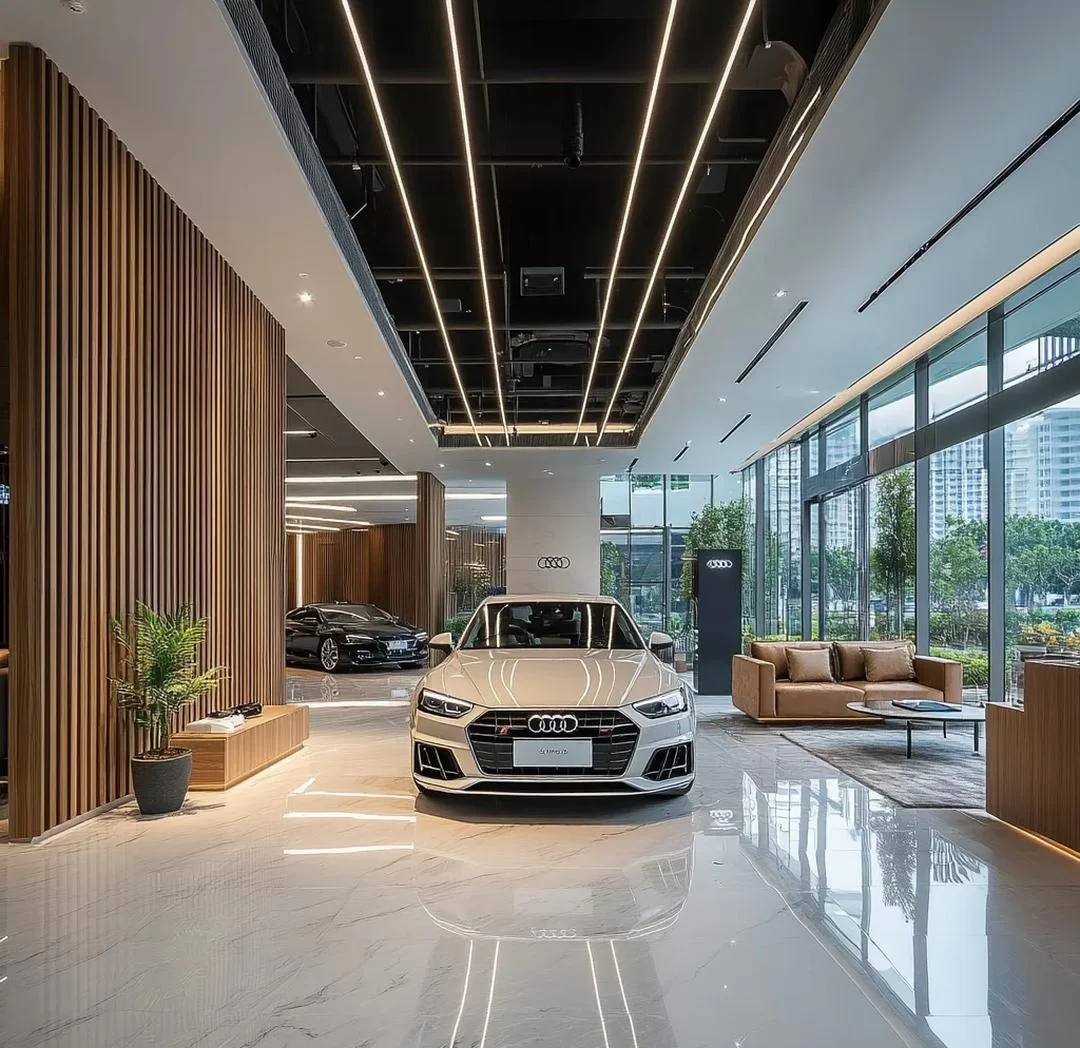
The showroom is the heart of the auto dealership sales experience, and effective showroom signage creates a premium, professional environment that showcases vehicles, provides information, and supports the sales process. Showroom signage includes several types, each serving a specific purpose in the customer journey.
Vehicle Display and Information Signs
- Vehicle display platforms and turntables: While not strictly “signage,” vehicle display platforms (raised platforms, rotating turntables, accent lighting) are important visual elements that highlight featured vehicles in the showroom and create a premium display environment. Featured vehicles (e.g., the newest model, a high-end trim, an electric vehicle) are often displayed on a raised platform with accent lighting and a dedicated information sign.
- Vehicle information kiosks / display signs: Next to each vehicle in the showroom (or at least featured vehicles), place an information sign or kiosk displaying the vehicle’s key features, specifications, price, fuel economy, technology features, and available options. These signs may be freestanding kiosks (with a printed graphic or digital display), wall-mounted signs, or tabletop displays, and they should be consistent with the dealership’s brand and the manufacturer’s brand standards. Digital information kiosks (with touchscreens) allow customers to explore vehicle configurations, options, and pricing interactively, and can be updated in real time as inventory and incentives change.
- Feature and technology demonstration signs: For vehicles with advanced technology features (e.g., infotainment systems, driver assistance features, electric vehicle charging, connectivity), place demonstration signs or interactive displays that explain and demonstrate these features to customers. These may include QR codes linking to video demonstrations, touchscreen displays, or physical demonstration units (e.g., a cutaway of an engine or battery, a working infotainment display).
- Brand and heritage displays: Many dealerships include brand heritage displays in the showroom, showcasing the manufacturer’s history, racing heritage, technological milestones, or future concepts (e.g., electric vehicles, autonomous driving). These displays may include historical photos, vintage vehicles or parts, timeline graphics, and interactive displays, and they help build brand affinity and customer engagement.
Promotional and Incentive Signage
- Sales event and incentive banners: Promotional banners in the showroom highlight current sales events, manufacturer incentives, financing offers, and lease deals (e.g., “0% APR for 60 Months,” “Sign & Drive Event,” “Employee Pricing for Everyone”). Banners may be hung from the ceiling, mounted on walls, or displayed on freestanding banner stands, and they should be professionally designed, consistent with the manufacturer’s brand standards, and updated regularly as promotions change.
- Financing and lease information displays: A dedicated display or kiosk in the showroom (often near the finance and insurance (F&I) office) provides information on financing options, lease terms, credit application, and extended warranty products. This display may include printed brochures, a digital kiosk for credit pre-approval, or a meeting area for F&I consultations.
- Trade-in and appraisal signage: Signs indicating the trade-in appraisal process, “We Buy Cars” or “We Accept All Trades” messages, and the location of the appraisal office or drive, encouraging customers to trade in their current vehicle.
- Certified Pre-Owned (CPO) displays: For dealerships with a CPO program, a dedicated display in the showroom (or near the used car entrance) explains the CPO program benefits (warranty, inspection, roadside assistance, exchange policy) and showcases CPO vehicles. CPO displays should follow the manufacturer’s CPO brand standards and use the manufacturer’s approved graphics and messaging.
Wayfinding and Informational Signage
- Department directional signs: Signs in the showroom guiding customers to different departments and amenities (Sales, Finance & Insurance, Service, Parts, Customer Lounge, Restrooms, Café, Children’s Play Area), ensuring customers can navigate the showroom easily and find what they need without asking for assistance.
- Salesperson and staff identification: Name badges for salespeople and staff (required by some dealerships and manufacturers), and a “Meet Our Team” display in the showroom showing photos and names of the sales, service, and management teams, helping customers identify staff and build rapport.
- Customer amenity signage: Signs identifying and promoting customer amenities (free Wi-Fi, coffee bar, customer lounge, children’s play area, charging stations, shuttle service), enhancing the customer experience and encouraging customers to spend more time in the dealership.
- Regulatory and compliance signage: Required regulatory signage in the showroom, including FTC Buyers Guide information (for used vehicles), lemon law disclosures, odometer disclosure statements, privacy notices (for credit applications), and state-specific consumer protection notices. These signs should be displayed in visible locations (e.g., near the F&I office, near used vehicle displays) and kept up to date with current regulations.
Service Department Signage: Efficiency and Customer Experience
The service department is a critical profit center for auto dealerships, and effective service department signage improves operational efficiency, enhances the customer experience, and increases service revenue. Service department signage includes several types, each serving a specific purpose in the service customer journey.
Service Drive and Check-In Signage
- Service drive entrance signs: Clearly identify the service drive entrance with building-mounted or freestanding signs, visible from the road and parking lot, guiding service customers to the correct entrance (separate from the showroom entrance).
- Service lane identification: Signs identifying individual service lanes or bays (e.g., “Express Service,” “Quick Lube,” “Service Advising,” “Appointment Check-In,” “Walk-In”), helping customers know where to stop for service advising and reducing confusion and congestion in the service drive.
- Check-in and appointment signs: Signs explaining the service check-in process, indicating where to check in for appointments vs. walk-ins, and providing estimated wait times for express services. Digital displays in the service drive can show real-time lane availability, advisor status, and estimated wait times, improving efficiency and customer satisfaction.
- Service menu and pricing displays: A visible display in the service drive or waiting area showing the service menu and pricing (oil change, tire rotation, brake service, battery replacement, etc.), including any current service specials or coupons. Transparent pricing builds customer trust and encourages customers to purchase additional services. Digital menu boards allow real-time updates to pricing and promotions and can be customized to the customer’s vehicle (e.g., showing recommended services based on mileage). Our guide to menu board signs and LED menu displays provides additional information on digital menu board solutions.
Waiting Area and Customer Lounge Signage
- Amenity and wayfinding signs: Signs in the service waiting area and customer lounge identifying amenities (restrooms, café, Wi-Fi, charging stations, TV, children’s play area, shuttle service) and guiding customers to the service advisor desk, cashier, and vehicle pickup area.
- Service status displays: Digital displays in the waiting area showing real-time service status for customers’ vehicles (e.g., “In Service,” “Ready for Pickup,” “Estimated completion: 2:30 PM”), reducing customer anxiety and the need to ask service advisors for updates. Some dealerships also offer text message or app-based status updates, which can be promoted with signage in the waiting area.
- Service and maintenance education displays: Informational displays in the waiting area educating customers on vehicle maintenance (recommended service intervals, warning signs of problems, seasonal maintenance tips, tire care, battery health), using printed graphics, digital displays, or interactive kiosks. Educational displays build trust, position the dealership as a knowledgeable expert, and encourage customers to purchase recommended services.
- Promotional and upsell signage: Signs in the waiting area promoting service specials, maintenance packages (e.g., “3 Oil Changes for $99”), tire promotions, brake service coupons, extended service contracts, and accessory sales (e.g., roof racks, floor mats, window tint). The waiting area is a high-dwell-time location where customers are receptive to service-related promotions, making it an ideal location for upsell signage.
- Customer feedback and review signage: Signs encouraging customers to provide feedback or leave online reviews (e.g., “How was your service? Scan here to leave a review,” “Rate your experience at [dealership name]”), helping the dealership monitor customer satisfaction and improve its online reputation. QR codes on these signs can link directly to review sites (Google, Yelp, DealerRater) or customer satisfaction surveys.
Service Bay and Back-of-House Signage
- Service bay identification: Signs identifying individual service bays (e.g., “Bay 1,” “Alignment Bay,” “Tire Mounting,” “Detail Bay,” “Electric Vehicle Service”), helping technicians navigate the shop and improving operational efficiency. Bay signs may also include the technician’s name and specialty, and digital displays can show the current vehicle and service status for each bay.
- Safety and regulatory signage: OSHA-compliant safety signage in the service shop, including hazard identification (high voltage for EV service, compressed gas, lifting equipment, sharp tools), PPE requirements (safety glasses, steel-toed shoes, gloves), no smoking signs, fire extinguisher locations, emergency exit signs, and first aid station locations. Our guide to exit signs and emergency signage provides detailed requirements for emergency signage.
- Efficiency and process signage: Signs in the service shop promoting efficiency and quality, including standard service procedures, torque specifications, fluid capacities, maintenance schedules, and quality control checklists. These signs help ensure consistent, high-quality service and reduce errors and rework.
- Parts department signage: Signs in the parts department identifying parts counters, wholesale vs. retail parts, will-call pickup, and parts storage areas (by category or manufacturer). Digital displays in the parts department can show real-time parts inventory, order status, and backorder information, improving efficiency for technicians and parts counter staff.
Designing a Cohesive Dealership Signage Program
A successful auto dealership signage program is cohesive, consistent, and aligned with both the automobile manufacturer’s brand standards and the dealership’s own brand identity, while addressing the unique functional and regulatory requirements of the dealership environment. Follow these best practices when designing your dealership signage program:
1. Develop a Signage Master Plan
Before purchasing or installing any signs, develop a comprehensive signage master plan that identifies all sign types, locations, and specifications needed for the entire dealership facility. The master plan should include:
- Exterior signage: pylon/monument signs, building-mounted signs, entrance/directional signs, inventory lot signs, promotional banners, traffic/safety signs
- Showroom signage: vehicle display signs, information kiosks, promotional banners, wayfinding signs, amenity signs, regulatory signs
- Service department signage: service drive signs, check-in signs, menu/pricing displays, waiting area signs, service bay signs, safety/regulatory signs, parts department signs
- Interior wayfinding: department directional signs, restroom signs, exit/emergency signs, ADA-compliant room identification signs
- Digital signage: pylon digital displays, showroom information kiosks, service menu boards, service status displays, waiting area promotional displays
The master plan should also specify the design system (materials, colors, typography, illumination, mounting methods) to ensure consistency across all signs, and should identify which signs are permanent vs. temporary/changeable (promotional banners, vehicle window stickers, sales event signage). The master plan should be reviewed and approved by the automobile manufacturer (for brand compliance) and the local building department (for sign code compliance) before implementation.
2. Ensure Brand Compliance and Consistency
Auto dealership signage is subject to strict brand standards from automobile manufacturers, which dictate the design, colors, fonts, dimensions, and placement of many dealership signs (particularly pylon signs, building-mounted signs, and showroom displays). Ensure all signage complies with the manufacturer’s brand standards and obtain brand approval before fabrication and installation. In addition to manufacturer brand standards, ensure consistency across all dealership signage (materials, colors, fonts, illumination, layout) for a cohesive, professional appearance. For multi-location dealership groups, ensure consistency across all locations, creating a recognizable, unified brand identity that customers can trust.
3. Prioritize Visibility and Readability
The primary purpose of dealership signage is to attract customers, communicate information, and guide them through the facility, so prioritize visibility and readability in all design decisions:
- High contrast: Use high-contrast color combinations for all text and graphics, ensuring readability in all lighting conditions (bright sunlight, overcast, nighttime). Follow manufacturer brand standards for colors, but ensure adequate contrast between text and background.
- Appropriate size: Size all text and graphics appropriately for the intended viewing distance. Roadside pylon signs require large text and logos for visibility from the road; showroom and service signs can use smaller text for closer viewing. Use the 1 inch = 30–50 feet visibility rule as a starting point, and adjust based on traffic speed and environmental conditions.
- Simple, legible typography: Use bold, sans-serif fonts (approved by the manufacturer’s brand standards) for all signage, avoiding decorative or script fonts that are difficult to read from a distance or at a glance. Ensure consistent typography across all signs for brand cohesion.
- Minimal clutter: Avoid overcrowding signs with too much text or too many graphics. Each sign should have a clear, primary message (brand name, promotion, direction) with secondary information kept to a minimum. Prioritize information based on importance and the customer’s needs at that touchpoint.
- Illumination: Ensure all exterior signs and key interior signs are adequately illuminated for nighttime visibility, with uniform illumination and no dark spots or hot spots. Use LED illumination for energy efficiency and long lifespan, and ensure illumination levels comply with local lighting regulations and manufacturer brand standards.
4. Optimize for the Customer Journey
Design dealership signage to guide customers through the purchase and service journey, providing the right information at the right time and reducing friction and confusion at each touchpoint:
- Roadside attraction: Pylon signs and promotional banners attract passing motorists and communicate the dealership’s brands, location, and current promotions.
- Arrival and navigation: Entrance and directional signs guide customers to the correct department (showroom, service, parts) and parking area, reducing confusion and creating a smooth arrival experience.
- Showroom engagement: Vehicle display signs, information kiosks, and promotional displays provide customers with vehicle information, pricing, and incentives, supporting the sales process and encouraging customer engagement.
- Service check-in: Service drive signs, lane identification, and menu/pricing displays guide service customers through the check-in process, reducing congestion and improving efficiency.
- Waiting and upsell: Waiting area signage (amenity signs, service status displays, educational displays, promotional signage) enhances the customer experience, reduces anxiety, and encourages additional service purchases.
- Pickup and follow-up: Vehicle pickup signs, cashier signs, and feedback/review signage guide customers through the pickup process and encourage follow-up (reviews, referrals, future service appointments).
By designing signage that supports each stage of the customer journey, you create a seamless, stress-free experience that increases customer satisfaction, loyalty, and sales.
5. Plan for Frequent Updates and Changes
Auto dealership signage requires frequent updates (sales events, manufacturer incentives, vehicle inventory, service specials, pricing), so design the signage program with updateability and flexibility in mind:
- Digital signage for dynamic content: Use digital LED displays (pylon displays, service menu boards, showroom kiosks, waiting area displays) for content that changes frequently (promotions, pricing, inventory, service status), enabling real-time updates without printing and installing new signs. Digital signage may have a higher upfront cost but saves money over time by eliminating the cost of printing and installing temporary promotional signs.
- Changeable promotional systems: For temporary promotional signage (banners, event signs, vehicle hang tags), use changeable systems (banner stands, retractable banners, reusable banner frames, magnetic vehicle signs) that can be easily updated and reused for different promotions, reducing waste and cost.
- Standardized templates: Develop standardized templates for promotional signage (banners, vehicle hang tags, event signs) that can be easily customized with new promotion details, ensuring consistent branding and reducing design time for each new promotion.
- Easy access for updates: Ensure digital displays and changeable promotional signs are positioned for easy access and updates, with reliable network connectivity (for digital displays) and simple installation/removal (for temporary signs).
- Centralized content management: For multi-location dealership groups, use a centralized digital signage content management system (CMS) to manage and update content across all locations, ensuring consistent branding and promotions while allowing local customization as needed.
6. Comply with Regulatory and Safety Requirements
Auto dealership signage is subject to a range of federal, state, and local regulations, and non-compliance can result in fines, mandatory sign removal, or legal liability. Key regulatory areas include:
- Local sign codes and zoning: Local sign codes regulate sign size, height, setback, illumination, and number of signs, particularly for pylon signs and temporary promotional signage. Always obtain the necessary sign permits and comply with local regulations. Our guide to outdoor sign permits and zoning provides detailed information on the permit process.
- FTC regulations: The Federal Trade Commission (FTC) regulates vehicle window stickers (Buyers Guides for used vehicles, Monroney labels for new vehicles), advertising claims (pricing, financing, fuel economy), and consumer protection disclosures. Ensure all vehicle window stickers and promotional signage comply with FTC regulations, including accurate pricing, clear disclosure of terms and conditions, and required disclosures.
- Manufacturer brand standards: As discussed earlier, automobile manufacturers have strict brand standards for dealership signage, and non-compliance can result in loss of franchise benefits, warranty claims, or even termination of the franchise agreement. Always obtain brand approval and follow manufacturer signage guidelines.
- OSHA and safety regulations: The service department and body shop are subject to OSHA regulations for workplace safety, including requirements for safety signage, hazard identification, PPE, emergency exits, and fire safety. Ensure all service shop and back-of-house signage complies with OSHA requirements.
- ADA accessibility: All permanent interior signage (restrooms, rooms, departments) must be ADA-compliant with tactile characters and Grade 2 Braille, and the dealership facility must be accessible to customers with disabilities (accessible parking, entrances, restrooms, service counters). Our ADA signage guide provides detailed specifications.
- NFPA 101 and building codes: Exit signs, emergency lighting, and egress signage must comply with NFPA 101 and local building codes. Our exit signs guide provides detailed requirements.
Hongbo Sign Auto Dealership Signage Solutions
At Hongbo Sign, we design and manufacture comprehensive signage solutions for auto dealerships, including new car dealerships, used car superstores, multi-brand dealerships, and service centers. With over a decade of experience in commercial signage manufacturing and a deep understanding of the unique requirements of the automotive retail environment, we deliver high-quality, durable, brand-compliant signage that attracts customers, supports the sales and service process, and enhances the dealership’s professional image.
- Comprehensive product range: We manufacture every type of auto dealership signage, including roadside pylon and monument signs (with integrated digital LED displays), building-mounted channel letters and push-through letters, showroom vehicle display signs and information kiosks, service drive and check-in signage, digital menu boards and service status displays, waiting area promotional and educational signage, service bay and parts department signs, inventory lot directional and promotional signage, entrance and wayfinding signs, safety and regulatory signage, and ADA-compliant accessibility signage.
- Brand compliance expertise: We have extensive experience working with automobile manufacturer brand standards and can produce signage that complies with the specific design, color, font, dimension, and placement requirements of most major automotive brands. We work with dealerships and their brand representatives to ensure all signage meets brand approval requirements, and we can produce signage using manufacturer-approved materials, colors, and graphics.
- Digital LED display expertise: We specialize in digital LED displays for auto dealerships, including pylon-mounted electronic message centers (for promotions and inventory), showroom information kiosks (with touchscreens for vehicle configuration and pricing), service department digital menu boards (for real-time pricing and promotions), and service status displays (for waiting area vehicle status updates). We offer a range of resolutions (pixel pitches) to suit different viewing distances and applications, and we provide user-friendly content management software with centralized control for multi-location dealership groups.
- Pylon sign engineering and manufacturing: We design and manufacture custom pylon and monument signs for auto dealerships, including single-pole, double-pole, and multi-brand configurations, with integrated digital LED displays and brand logo panels. Our pylon signs are engineered to meet local wind load requirements (ASCE 7) and are constructed from durable, weather-resistant materials (galvanized steel poles, aluminum cabinets with powder coating, acrylic faces). We provide structural engineering calculations and all documentation needed for building permit applications.
- Illuminated letter and sign expertise: We manufacture a full range of illuminated signage for dealerships, including front-lit channel letters, backlit/halo-lit letters, push-through letters, light boxes, and edge-lit signs, using high-quality, UL-listed LED modules and drivers for uniform illumination and long lifespan. Our guide to push-through letters and channel letter guides provide additional information on our illuminated letter capabilities.
- Multi-location rollout capability: Whether you need signage for a single dealership or a 50+ location dealership group, we have the production capacity and project management systems to deliver consistent, high-quality signage across all locations. We offer centralized project management, coordinated production and shipping schedules, brand consistency controls, centralized digital signage content management, and bulk pricing for large orders.
- Durable, low-maintenance construction: All our dealership signage is designed for durability and low maintenance in the high-traffic, outdoor automotive retail environment, using commercial-grade, weather-resistant materials (aluminum, stainless steel, UV-stabilized acrylic, premium vinyl) and high-quality fabrication techniques. We design signs with easy access for maintenance and content updates, with modular, replaceable components (LED modules, power supplies, graphics) to minimize downtime and repair costs. Our guide to LED sign maintenance provides detailed cleaning and maintenance recommendations.
- Regulatory compliance support: We provide all documentation and certifications needed for regulatory compliance, including UL listing for illuminated signs and digital displays, structural engineering calculations for pylon signs, ADA-compliant tactile/Braille signage, and sign drawings/specifications for permit applications. We stay current with federal, state, and local regulations affecting auto dealership signage (FTC, OSHA, ADA, NFPA, local sign codes) and can advise on compliance requirements.
- Installation support: We provide comprehensive installation instructions, mounting templates, wiring diagrams, and technical support for your local installation team. For complex installations (pylon signs, digital displays, service drive signage), we can provide remote technical support or coordinate with your installer to ensure proper installation and electrical connection.
- Competitive factory-direct pricing: As a direct manufacturer, we offer competitive factory-direct pricing with no middleman markup. We provide transparent, itemized quotations with no hidden fees, and we can work with you to find cost-effective solutions that meet your budget without compromising quality, brand compliance, or durability. We offer volume discounts for large orders and multi-location rollouts.
We understand that auto dealership signage is a critical investment in your dealership’s visibility, customer experience, and sales performance, and we are committed to delivering signage that looks great, performs reliably, and supports your business goals. From initial signage master planning and design to fabrication, quality control, shipping, and after-sales support, we are with you every step of the way.
Ready to upgrade your auto dealership signage? Contact us today for a free consultation and factory-direct quote. Our team will work with you to design a comprehensive, brand-compliant signage program that attracts customers, supports the sales and service process, and enhances your dealership’s professional image.
Frequently Asked Questions
Q: What signage does an auto dealership need?
A: A typical auto dealership signage package includes a large pylon or monument sign at the roadside, dealership building identification, vehicle inventory display signs, service department identification, parts department signs, showroom interior signage, promotional and seasonal displays, directional and wayfinding signs, and regulatory signage. Digital displays for inventory pricing and promotions are increasingly common.
Q: How are dealership signs different from other commercial signage?
A: Auto dealership signage often requires larger-scale structures for highway visibility, specific brand compliance with manufacturer signage standards, integrated digital displays for real-time inventory and pricing, and durable construction for high-traffic outdoor environments. Dealership signs may also include vehicle-specific graphics, promotional banners, and temporary event signage that changes frequently. Always confirm brand signage standards before fabrication.
Q: Can dealership signage be updated for promotions and events?
A: Yes, many dealerships use modular signage systems that allow for quick updates. Changeable letter panels, banner systems, digital LED displays, and removable graphics make it easy to update promotional messaging, pricing, inventory, and event information. Digital displays offer the most flexibility, allowing real-time updates from a central management system. Plan for update flexibility during the initial signage design.