


Why Sign Sampling Matters for Bulk Orders
When placing a bulk custom sign order—whether it’s 50 channel letters for a retail chain rollout, 200 wayfinding signs for a hotel development, or 500 nameplates for a corporate campus—ordering a pre-production sample is one of the most important steps you can take to ensure quality, avoid costly mistakes, and protect your investment. A sign sample is a physical prototype of your sign, produced using the same materials, processes, and finishes as the bulk order, allowing you to inspect, test, and approve the final product before full production begins.
Skipping the sampling step to save time or money is a false economy. Without a sample, you won’t know if the color match is accurate, the LED brightness is sufficient, the metal finish meets your expectations, the dimensions are correct, or the overall quality is up to standard. Discovering issues after bulk production has started can result in production delays, rework costs, wasted materials, and in the worst case, a complete order rejection. A pre-production sample eliminates these risks by giving you a tangible reference point to approve before the manufacturer commits to full-scale production.
For international buyers sourcing signs from overseas manufacturers, sampling is even more critical. Without the ability to visit the factory and inspect production in person, a physical sample provides the assurance that the manufacturer understands your specifications and can deliver the quality you expect. It also serves as a quality benchmark that can be used to inspect the bulk order upon delivery—if the bulk production doesn’t match the approved sample, you have grounds for rejection or rework.
Types of Sign Samples and Prototypes
Not all sign samples are the same. Depending on your project requirements, budget, and timeline, different types of samples may be appropriate:
1. Digital Proof / Virtual Sample
A digital proof is a computer-generated rendering or mockup of your sign, showing how it will look with the specified materials, colors, dimensions, and lighting. Digital proofs are typically provided free of charge and are useful for visualizing the design and confirming layout, proportions, and color placement. However, a digital proof is not a physical sample and cannot accurately represent the actual material texture, finish, LED brightness, or color accuracy of the physical sign. Digital proofs should be used as an initial design confirmation step, not as a substitute for a physical pre-production sample.
2. Material Sample / Finish Sample
A material sample is a small swatch or sample piece of the specific material and finish to be used in production—for example, a brushed stainless steel swatch, a painted metal color sample, an acrylic color chip, or a wood grain finish sample. Material samples are useful for confirming color accuracy and finish quality before committing to the full sign design. They are typically low-cost (or free for established clients) and have short lead times (3–7 days). However, material samples only show the material/finish, not the complete sign with all its components, lighting, and construction.
3. Functional Prototype / Pre-Production Sample
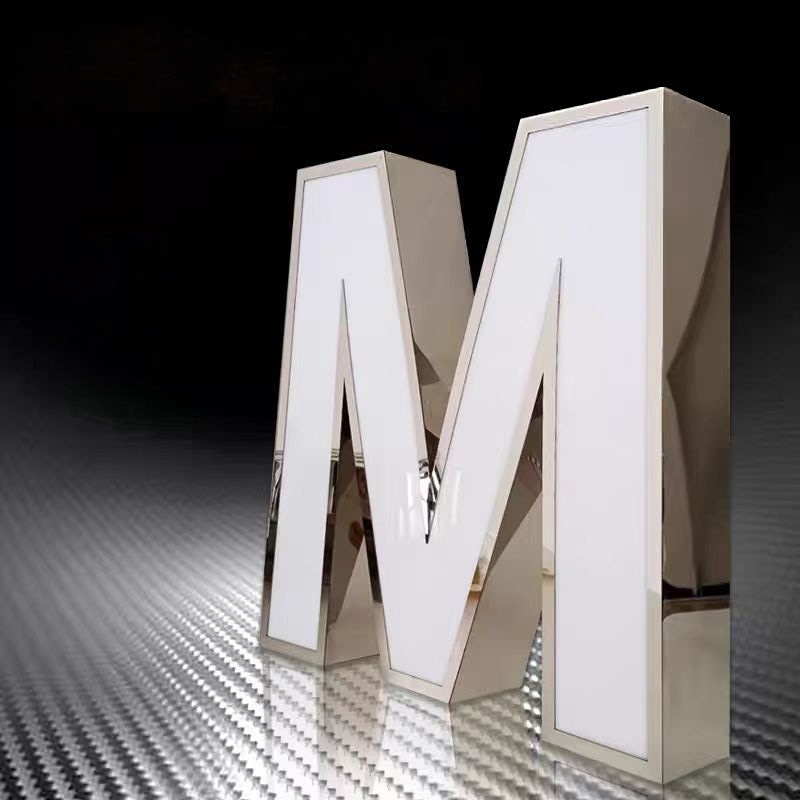
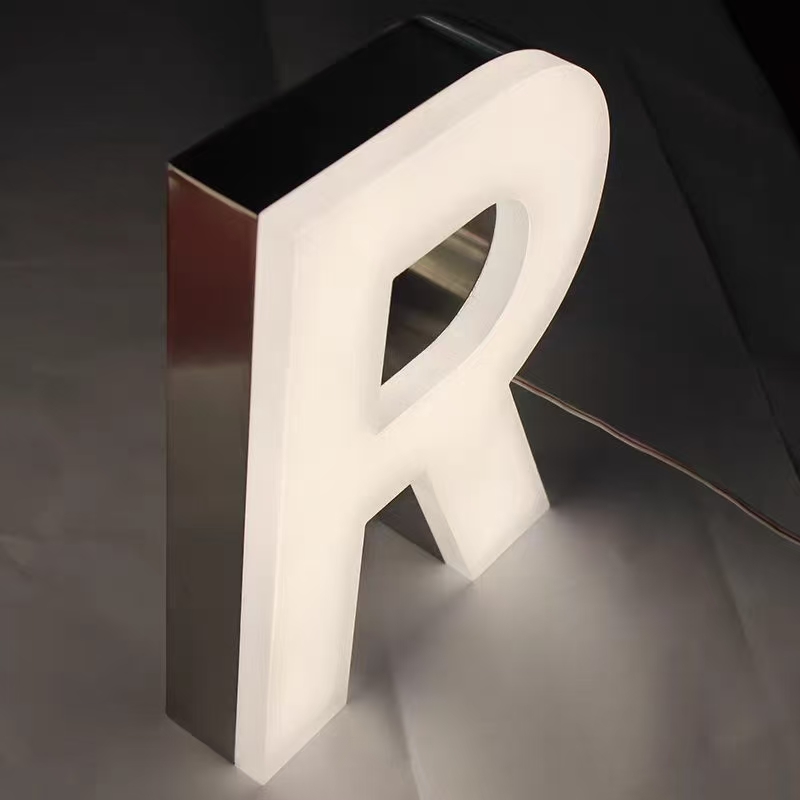
A functional prototype, also called a pre-production sample or production sample, is a complete, fully functional version of your sign, produced using the exact materials, processes, finishes, and components that will be used in the bulk order. For illuminated signs, the prototype includes working LEDs, power supply, and wiring, allowing you to test brightness, color temperature, uniformity, and electrical performance. For non-illuminated signs, it includes the complete fabrication, painting, and finishing. A pre-production sample is the gold standard for quality assurance and is strongly recommended for all bulk orders, especially first-time orders with a new manufacturer.
4. First Article Inspection (FAI) Sample
A first article inspection sample is the first unit produced from the actual bulk production run, inspected and approved before the remaining units are produced. Unlike a pre-production sample (which may be produced separately using prototype tooling), the FAI sample is produced on the actual production line with the same tooling, materials, and processes as the rest of the order. FAI is common in high-volume or precision-critical sign projects where consistency across all units is paramount. The FAI sample is inspected against a detailed checklist of specifications, and only after approval does the manufacturer proceed with full production.
The Sign Sampling Process: Step by Step
Step 1: Design Finalization and Specification
Before a sample can be produced, the design must be finalized and all specifications clearly documented. This includes the vector design file (with all text outlined), dimensions, materials, finishes, colors (Pantone numbers), LED specifications (brightness, color temperature, IP rating), mounting method, and any special requirements. The more detailed and precise your specifications, the more accurate the sample will be. Our guide to sign design files provides detailed information on preparing artwork for production.
Step 2: Sample Quotation and Approval
Once the specifications are finalized, the manufacturer will provide a sample quotation, including the sample cost, tooling/mold fees (if applicable), lead time, and shipping cost. Sample costs are typically higher per unit than bulk unit costs because the manufacturer cannot achieve economies of scale on a single unit. However, many manufacturers will deduct or refund the sample fee from the bulk order payment if the bulk order is placed within a specified timeframe (e.g., 30–90 days). Review the sample quotation carefully, confirm all specifications, and approve the sample production.
Step 3: Sample Production
The manufacturer produces the sample according to the approved specifications. Sample production typically takes 7–15 working days for standard signs and up to 3–4 weeks for complex or custom signs requiring special tooling, molds, or components. During sample production, the manufacturer may send progress photos for your review. If any issues or questions arise during production, the manufacturer should contact you for clarification before proceeding.
Step 4: Sample Inspection and Photos
Once the sample is complete, the manufacturer conducts an internal quality inspection and provides detailed photos (and often videos) of the sample from multiple angles, including close-ups of materials, finishes, joints, and illuminated views (for LED signs). Review these photos carefully against your specifications. If any issues are identified, request modifications before the sample is shipped. Some manufacturers offer video call inspections, allowing you to view the sample in real time and ask questions.
Step 5: Sample Shipment and Physical Inspection
After you approve the photos, the manufacturer ships the sample to you for physical inspection. Samples are typically shipped via international express courier (DHL, FedEx, UPS) with a transit time of 3–7 days. Upon receiving the sample, conduct a thorough physical inspection:
- Verify dimensions against the approved drawings
- Check color accuracy against Pantone swatches or brand standards
- Inspect material quality and finish (brushing, polishing, painting, powder coating)
- Test LED illumination (brightness, uniformity, color temperature, functionality)
- Check construction quality (welds, joints, fasteners, sealing)
- Verify mounting hardware and installation method
- Test electrical components (power supply, wiring, switches, dimmers)
- Assess overall build quality and durability
Step 6: Sample Approval or Revision
After inspecting the physical sample, you have three options:
- Approve as-is: If the sample meets all specifications and quality expectations, approve it and proceed to bulk production. The approved sample becomes the quality benchmark for the bulk order.
- Request revisions: If minor issues are identified (e.g., color needs adjustment, LED brightness is insufficient, a dimension is slightly off), request a revised sample. The manufacturer will modify the sample and resubmit for approval. Note that revisions may incur additional costs and extend the timeline.
- Reject and redesign: If the sample has fundamental issues (e.g., the design doesn’t work as a physical sign, the material choice is inappropriate, or quality is unacceptable), you may need to go back to the design stage and make significant changes before re-sampling.
It’s important to be thorough and honest in your sample evaluation. Approving a sample with known issues and expecting the bulk order to be different is unrealistic—the bulk order will match the approved sample, warts and all. If you’re not satisfied with the sample, request revisions before approving bulk production.
Step 7: Bulk Production
Once the sample is approved, the manufacturer proceeds with bulk production using the approved sample as the quality standard. The approved sample should be clearly labeled and retained by both the buyer and manufacturer as the reference benchmark. During bulk production, the manufacturer should conduct regular quality checks against the approved sample to ensure consistency. For high-volume orders, consider requesting a first article inspection (FAI) from the actual production run for additional assurance.
Sign Sample Costs: What to Expect
Sign sample costs vary widely depending on the complexity, size, materials, and components of the sign. Here’s a general breakdown:
| Sample Type | Typical Cost Range | Lead Time | Best For |
|---|---|---|---|
| Digital proof / rendering | Free – $50 | 1–3 days | Initial design visualization |
| Material / finish swatch | Free – $30 | 3–7 days | Color and finish confirmation |
| Simple non-illuminated sign sample | $50 – $300 | 7–10 days | Flat cut letters, plaques, simple signs |
| Standard illuminated sign sample | $200 – $800 | 10–15 days | Channel letters, light boxes, LED signs |
| Complex / custom sign prototype | $500 – $2,000+ | 2–4 weeks | Custom shapes, special materials, complex lighting |
| Tooling / mold fee (if applicable) | $100 – $1,000+ | Included in sample lead time | Custom extrusions, injection molded parts, custom neon |
Important notes about sample costs:
- Sample fee refund: Many manufacturers will refund or deduct the sample fee from the bulk order payment if the bulk order is placed within a specified timeframe (typically 30–90 days after sample approval). Always ask about sample fee refund policies when requesting a sample quotation.
- Shipping cost: International sample shipping via express courier typically costs $40–$150 depending on the size and weight of the sample and the destination country. This is usually separate from the sample production cost.
- Tooling/mold fees: For signs requiring custom tooling (e.g., custom aluminum extrusions, injection molded acrylic parts, custom neon tube bending), a separate tooling or mold fee may apply. This fee is typically a one-time cost and may be refundable or amortized over the bulk order depending on the order volume.
- Revision costs: If you request sample revisions beyond what is included in the original sample fee, additional charges may apply. Clarify what is included in the sample fee and what revisions are covered before approving sample production.
Sample Lead Times and Project Planning
Incorporating sampling into your project timeline is essential for avoiding delays. A typical sampling cycle for a standard illuminated sign takes:
- Design finalization and specification: 1–5 days (depending on design complexity and client responsiveness)
- Sample quotation and approval: 1–3 days
- Sample production: 7–15 working days
- Sample photo review and approval: 1–3 days
- International sample shipping: 3–7 days
- Physical inspection and approval: 1–5 days
- Total sampling cycle: 2–5 weeks
For complex signs or multiple revision rounds, the sampling cycle can extend to 6–8 weeks. It’s important to factor this into your overall project timeline. If you have a tight deadline, consider the following strategies:
- Start the sampling process as early as possible, even before all project details are finalized
- Use digital proofs and material swatches for initial confirmation while the physical sample is in production
- Be responsive during the sample review process to avoid delays
- Limit the number of revision rounds by providing detailed, accurate specifications upfront
- For repeat orders with an existing approved sample, sampling may not be necessary (though a first article inspection is still recommended)
What to Look for When Inspecting a Sign Sample
A thorough sample inspection is critical to ensuring the bulk order meets your expectations. Use this checklist when evaluating a sign sample:
Visual and Aesthetic Inspection
- Color accuracy: Do the colors match the approved Pantone swatches or brand standards? Check under both natural and artificial lighting.
- Finish quality: Is the paint/powder coating smooth and even? Are there any runs, drips, orange peel, or imperfections? Is the brushing/polishing consistent?
- Material quality: Does the material meet specifications (gauge/thickness, grade, texture)? Are there any scratches, dents, or defects?
- Construction quality: Are welds clean and smooth? Are joints tight and well-fitted? Are fasteners neat and appropriately placed?
- Logo/text accuracy: Does the sign match the approved design file? Are proportions, spacing, and details correct?
- Sealing and weatherproofing: Are all seams, joints, and penetrations properly sealed? Is the sign rated for the intended environment (indoor/outdoor, IP rating)?
Functional and Electrical Inspection (for illuminated signs)
- LED brightness: Is the illumination bright enough for the intended viewing distance and environment? Is brightness uniform across the entire sign face?
- Color temperature: Does the LED color temperature match the specification (e.g., 3000K warm white, 6500K cool white)? Are there any color inconsistencies between letters or sections?
- Hot spots / dark spots: Are there any visible LED hot spots (individual LED points visible through the face) or dark spots (areas with insufficient illumination)?
- Power supply: Is the power supply appropriately rated for the sign? Does it get excessively hot during operation? Is it UL/CE certified as required?
- Wiring: Is the wiring neat, properly secured, and appropriately rated? Are connections secure and insulated?
- Functionality: Do all LEDs light up? Do any dimming/color-changing functions work correctly? Is the sign compatible with the specified control system (dimmer, timer, DMX)?
- Electrical safety: Does the sign meet applicable electrical safety standards (UL, CE, ETL)? Are there any exposed live parts or potential shock hazards?
Dimensional and Structural Inspection
- Dimensions: Verify all critical dimensions (overall size, letter height, stroke width, thickness, mounting hole spacing) against the approved drawings.
- Weight: Is the sign weight as expected? This is important for mounting structure and installation planning.
- Mounting: Does the mounting method work as intended? Is the mounting hardware included and appropriate? Can the sign be safely installed on the intended surface?
- Structural integrity: Is the sign rigid and well-constructed? Does it flex or bend excessively? Are there any weak points or potential failure points?
- Accessibility: For signs requiring maintenance (e.g., LED replacement), is there adequate access to internal components?
Common Sample Issues and How to Resolve Them
Issue 1: Color Mismatch
Problem: The sample color doesn’t match the approved Pantone swatch or brand standard.
Resolution: Request a color adjustment. Provide the manufacturer with a physical Pantone swatch or a previously approved color sample for reference. For painted/powder-coated finishes, the manufacturer can adjust the paint formula and resubmit a color sample (or full revised sample) for approval. Note that exact color matching across different materials (e.g., painted metal vs. acrylic) may not be possible due to material differences—discuss acceptable color tolerances with your manufacturer upfront.
Issue 2: LED Brightness or Uniformity Problems
Problem: The LED illumination is too dim, too bright, has visible hot spots, or has dark areas.
Resolution: Request LED adjustments. The manufacturer can increase LED density (more LEDs per area), use higher-brightness LEDs, add light diffusers, adjust the LED-to-face distance, or modify the reflector design. For hot spots, adding a diffuser layer or increasing the depth of the sign can help. For dark spots, adding LEDs in under-illuminated areas or improving light distribution can resolve the issue. Our illuminated letters guide provides detailed information on LED lighting options and best practices.
Issue 3: Construction or Finish Quality Issues
Problem: The sample has visible welds, uneven paint, sharp edges, or other finish quality issues.
Resolution: Request a revised sample with improved finishing. Clearly document the specific issues with photos and descriptions. A reputable manufacturer will address quality issues in the revised sample. If the manufacturer is unable or unwilling to resolve basic quality issues, this may be a red flag about their overall quality standards and you may want to consider alternative suppliers. Our guide to choosing a reliable sign manufacturer provides criteria for evaluating supplier quality.
Issue 4: Design Doesn’t Translate Well to Physical Sign
Problem: The logo or design looks good on screen but doesn’t work well as a physical sign—e.g., thin lines are too fragile, small text is illegible, or complex details can’t be fabricated.
Resolution: Work with the manufacturer to modify the design for production. This may involve thickening thin lines, simplifying complex details, increasing minimum letter sizes, or adjusting proportions. A good manufacturer will identify these issues during the design review stage and suggest modifications before sample production. Our channel letter design guide provides design recommendations for dimensional signs.
Issue 5: Sample Exceeds Budget Expectations
Problem: The sample cost is higher than expected, making the overall project more expensive.
Resolution: Discuss sample fee refund policies with the manufacturer. Many will refund the sample fee from the bulk order. Consider whether a simpler sample type (e.g., material swatch + digital proof instead of full functional prototype) is sufficient for your project. For repeat orders or ongoing programs, negotiate a sampling agreement that covers multiple samples at a reduced cost. Remember that the cost of a sample is minimal compared to the cost of a bulk order rejection due to quality issues.
When You Can Skip the Sample (and When You Absolutely Shouldn’t)
When Sampling May Not Be Necessary
- Repeat orders: If you’re reordering the exact same sign from the same manufacturer with no changes to design, materials, or specifications, and the previous order was satisfactory, a new sample may not be necessary. However, a first article inspection from the production run is still recommended.
- Very small, low-value orders: For small, simple, low-cost signs (e.g., a single nameplate or a few flat cut letters), the cost of sampling may approach the cost of the full order, making sampling impractical. In these cases, rely on digital proofs and the manufacturer’s reputation.
- Established supplier with proven track record: If you have a long-standing relationship with a manufacturer and have approved multiple previous samples that consistently match bulk production, you may choose to skip sampling for straightforward repeat or similar designs. However, always sample for new designs, materials, or processes.
When You Absolutely Should Order a Sample
- First-time order with a new manufacturer: Always sample before committing to a bulk order with a new supplier. The sample is your best indicator of the manufacturer’s quality, communication, and ability to meet specifications.
- New design or custom sign: Any sign with a new design, custom shape, or unique construction should be sampled to verify that the design works as a physical product.
- New materials or finishes: If you’re using a new material, finish, or color for the first time, a sample (at minimum a material swatch) is essential to confirm the result meets expectations.
- Illuminated signs: LED signs should always be sampled to verify brightness, uniformity, color temperature, and electrical performance. Digital renders cannot accurately represent how an LED sign will look in person.
- Large or high-value bulk orders: The larger the order value, the more important sampling becomes. The cost of a sample is negligible compared to the risk of a $50,000+ order rejection.
- Multi-location rollouts: For sign programs involving multiple locations (e.g., retail chain rollout, hotel chain), a prototype ensures consistency across all locations and allows you to identify and resolve issues before producing hundreds of units.
- Tight quality requirements: If the sign has strict quality, color accuracy, or performance requirements (e.g., luxury brand standards, regulatory compliance), sampling is essential to verify the manufacturer can meet those requirements.
Hongbo Sign Sampling and Prototyping Services
At Hongbo Sign, we believe that a thorough sampling process is the foundation of a successful bulk sign order. That’s why we offer comprehensive sampling and prototyping services to all our clients:
- Free digital proofs: We provide complimentary digital renderings and mockups for all projects, allowing you to visualize the design before committing to physical sampling.
- Material and finish swatches: We can provide material and finish samples (painted metal chips, acrylic color samples, brushed/polished steel swatches) for quick color and finish confirmation.
- Functional pre-production samples: Our standard sampling service produces a complete, fully functional sign using the same materials, processes, and components as the bulk order. For illuminated signs, the sample includes working LEDs, power supply, and all electrical components.
- Sample fee refund: We refund 100% of the sample fee from the bulk order payment when the bulk order is placed within 60 days of sample approval.
- Progress updates: During sample production, we provide regular progress photos so you can track the manufacturing process and address any questions early.
- Detailed sample documentation: Each sample comes with a specification sheet documenting materials, finishes, colors, LED specifications, dimensions, and test results, serving as the quality benchmark for the bulk order.
- Revision support: If the sample requires revisions, we work with you to make the necessary adjustments and provide a revised sample promptly. We include one round of minor revisions in our standard sample fee.
- First article inspection: For bulk orders, we offer first article inspection (FAI) services, producing and inspecting the first unit from the actual production run before proceeding with full production.
Our typical sample lead time is 7–15 working days for standard signs, with international express shipping taking an additional 3–7 days. We understand that project timelines are important, and we work diligently to deliver high-quality samples as quickly as possible without compromising on quality.
Ready to start your custom sign project with confidence? Contact us today to request a sample quotation and free digital proof. Our team will guide you through the sampling process, answer any questions, and ensure your bulk order starts with a proven, approved prototype.
Frequently Asked Questions
Q: Do I need a physical sample before placing a bulk sign order?
A: For first-time orders, high-value projects, or color-critical applications, a physical sample is strongly recommended. A pre-production prototype eliminates color difference, texture deviation, and lighting uncertainty that digital proofs cannot fully resolve. For repeat orders with confirmed specifications, samples may be optional.
Q: How long does sign sampling and prototyping take?
A: Simple samples typically take 3–7 working days, while complex illuminated prototypes or multi-material samples may require 10–15 working days. International shipping adds additional transit time. Always confirm the sample timeline with your manufacturer before committing to a project deadline.
Q: Is the sample cost deductible from the bulk order?
A: Many manufacturers apply the sample cost as a credit toward the bulk order, but this varies by supplier and project. Always confirm whether the sample fee is refundable, deductible, or a separate charge before proceeding. Tooling and mold fees may have different deductibility terms than sample fabrication costs.