


Category: Industry Insights | Cluster: C5 Technical Support | Priority: P0 | Published: 2026-09-02
Choosing the right sign materials is one of the first and most important decisions in any signage project. Material selection affects the appearance, durability, cost, fabrication method, installation requirements and long-term performance of a sign.
Acrylic, PVC foam board, aluminum, stainless steel and coroplast each have different strengths. The best material depends on where the sign will be installed, how long it needs to last, whether it will be illuminated, the required finish and the project budget.
This guide compares the most common sign materials and explains which options are best for outdoor signs, indoor signage, illuminated letters, premium architectural signs and temporary applications.
The Main Sign Materials at a Glance
| Material | Cost | Durability | Appearance | Best For |
|---|---|---|---|---|
| Acrylic (PMMA) | Medium | Good with proper grade | Glossy, colorful, clean | Illuminated faces, interior signs, letters |
| PVC Foam Board | Low | Fair | Flat, smooth, paintable | Budget interior signs and displays |
| Aluminum | Medium | Excellent | Clean, modern, versatile | Outdoor signs, letters and panels |
| Stainless Steel | High | Excellent | Premium, metallic | Premium architectural and corporate signs |
| Coroplast (Correx) | Low | Short-term | Basic, practical | Temporary and promotional signs |
There is no single “best” sign material for every project. Instead, the right choice depends on the application.
Acrylic (PMMA) Signs
Acrylic, also known as PMMA or acrylic sheet, is one of the most widely used materials in modern signage.
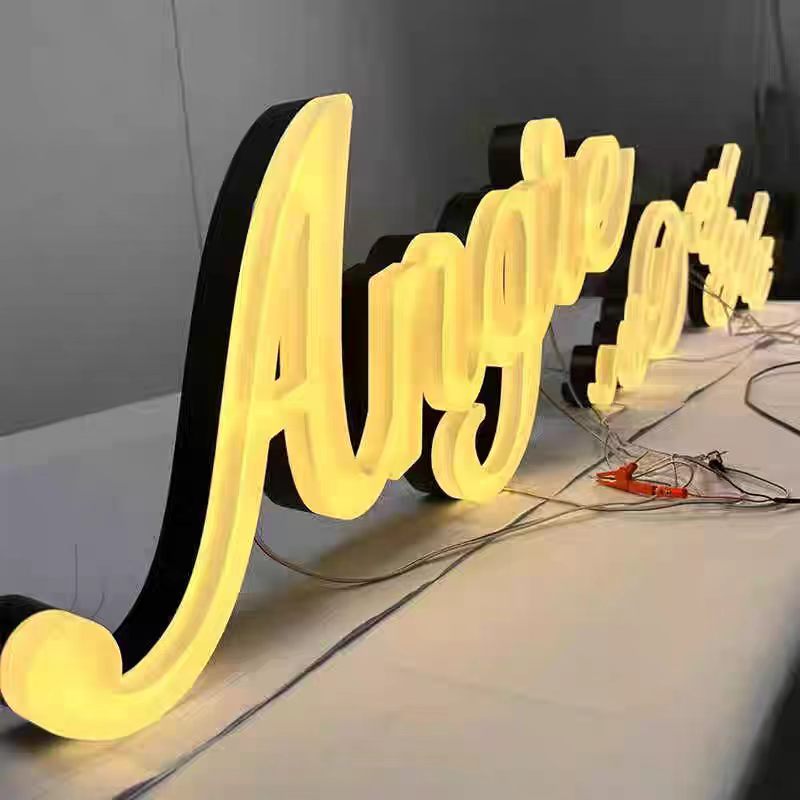
It is especially common in illuminated signs because translucent acrylic can transmit LED light while providing a smooth and attractive face. It is also available in a wide range of colors, finishes and thicknesses.
Acrylic can be CNC cut, laser cut, routed, printed or formed into different shapes, making it highly versatile for custom signage.
Advantages of Acrylic
- Clean and modern appearance
- Available in many colors and finishes
- Excellent light transmission for illuminated signs
- Easy to CNC or laser cut
- Suitable for dimensional letters and panels
- Good surface for printing and graphics
- Lightweight compared with many metal materials
Limitations of Acrylic
Acrylic can perform well outdoors when cast-grade acrylic, suitable thickness and proper finish are selected, but it generally requires more consideration than aluminum or stainless steel for long-term exterior applications.
Long-term exposure to UV radiation, temperature changes and physical impact can affect acrylic depending on the material grade and installation environment.
For more information about acrylic signage applications, see our guide: Acrylic Letters and Signs: Complete Guide to Types, Manufacturing, and Lighting.
Best Applications for Acrylic
Acrylic is particularly suitable for:
- Illuminated channel letter faces
- Interior wall letters
- Reception signs
- Retail signage
- Logo panels
- Backlit signs
- Decorative dimensional letters
- Indoor corporate signage
For illuminated signage, acrylic is often combined with a metal body rather than used as the entire sign structure.
PVC Foam Board Signs
PVC foam board is a lightweight and economical signage material. It is often used when the project requires a smooth, rigid sheet without the cost of aluminum or stainless steel.
PVC foam board can be cut, routed, printed and painted, making it useful for interior displays and short-term signage.
Advantages of PVC Foam Board
- Low material cost
- Lightweight
- Easy to cut and fabricate
- Smooth surface
- Can be painted or printed
- Suitable for indoor displays
- Does not rot like wood
Limitations of PVC Foam Board
PVC foam board is softer than aluminum and stainless steel, so it can scratch or dent more easily.
Strong sunlight, high temperatures and prolonged outdoor exposure can also affect its appearance and structural stability. For permanent outdoor signage, aluminum is generally a better choice.
Best Applications for PVC
PVC foam board works well for:
- Indoor signs
- Retail displays
- Promotional boards
- Interior directional signs
- Short-term displays
- Budget signage
- Exhibition graphics
For permanent exterior signs, consider aluminum or stainless steel instead.
Aluminum Signs
Aluminum is one of the most practical materials for long-term outdoor signage.
It provides a strong combination of low weight, corrosion resistance, durability and fabrication flexibility. Aluminum can be cut, bent, welded, routed and finished in many different ways.
It is widely used for sign panels, channel letter bodies, fascia signs, architectural letters and sign structures.
Advantages of Aluminum
- Lightweight
- Excellent outdoor durability
- Good corrosion resistance
- Easy to fabricate
- Suitable for large panels
- Compatible with paint and powder coating
- Suitable for illuminated and non-illuminated signs
- Good strength-to-weight ratio
Aluminum is often the smart default for outdoor commercial signage when the project requires a durable material without the higher cost of stainless steel.
Aluminum Finishes
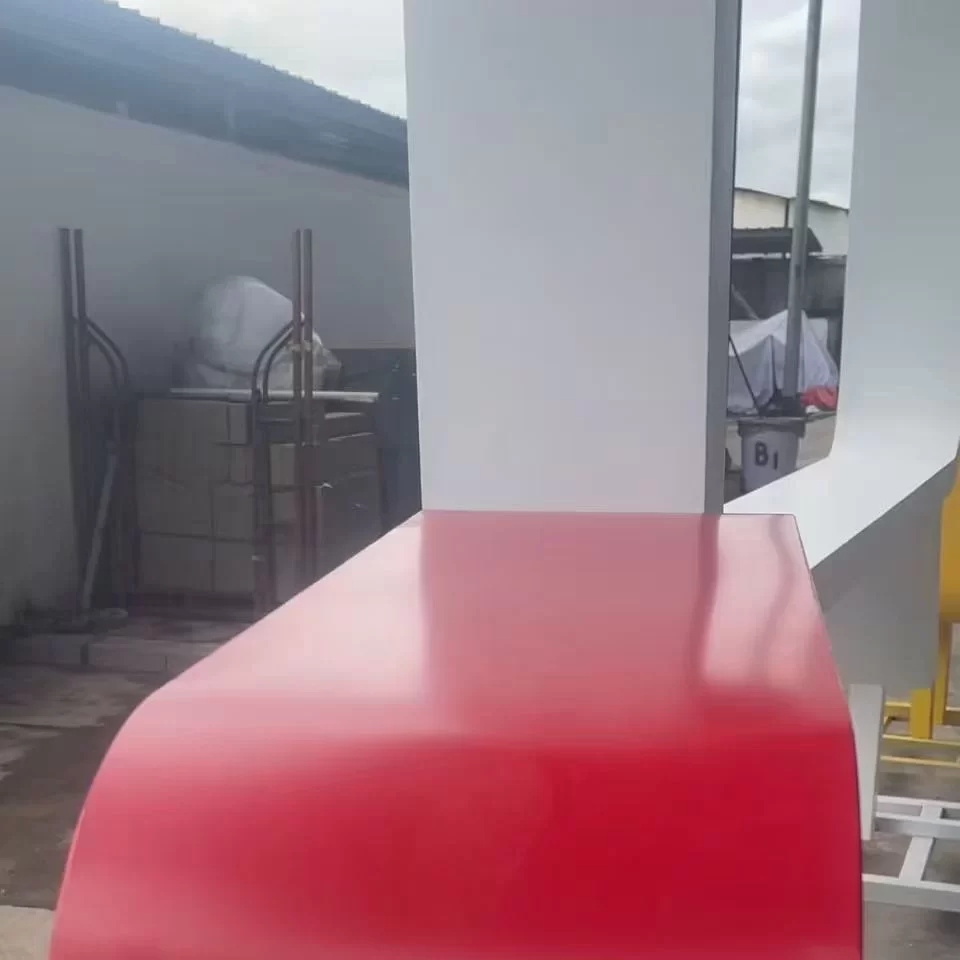
Depending on the application, aluminum can be finished with:
- Powder coating
- Wet paint
- Anodizing
- Brushed finishes
- Vinyl graphics
- Custom colors
For outdoor applications, a properly prepared and finished aluminum sign can provide long-term service with relatively low maintenance.
Best Applications for Aluminum
Aluminum is particularly suitable for:
- Outdoor building signs
- Channel letters
- Fascia signs
- Sign panels
- Directional signage
- Architectural letters
- Commercial storefront signs
- Large-format sign structures
For a deeper look at metal letters, fabrication methods and material options, see our guide: Metal Letters: Types, Materials, and Manufacturing Guide for B2B Sign Buyers.
Stainless Steel Signs
Stainless steel is the premium option when appearance, strength and corrosion resistance are major priorities.
It is commonly selected for corporate buildings, luxury retail environments, hotels, high-end commercial projects and architectural signage.
Stainless steel provides a distinctive metallic appearance and can be manufactured with brushed, mirror-polished or painted finishes.
Advantages of Stainless Steel
- Excellent strength
- Highly corrosion-resistant
- Premium appearance
- Excellent dimensional stability
- Suitable for long-term exterior applications
- Available in brushed and mirror finishes
- Strong visual presence
However, stainless steel generally costs more than aluminum and can require more specialized fabrication.
Brushed vs Mirror Stainless Steel
Two common finishes are:
Brushed stainless steel
Creates a directional satin appearance and helps reduce the visibility of minor surface marks. It is widely used for corporate letters and architectural signage.
Mirror stainless steel
Provides a highly reflective surface for a more dramatic and luxurious appearance.
The right finish depends on the desired visual effect, surrounding architecture and maintenance requirements.
You can also learn more about surface treatments in our article: Stainless Steel and Metal Sign Finishes: Complete Selection Guide.
Stainless Steel Grades
For signage projects, stainless steel grade selection can matter in demanding environments.
304 stainless steel is widely used for general commercial applications, while 316 stainless steel provides improved resistance in environments with higher exposure to chlorides and salt, such as many coastal locations.
Stainless steel should therefore be described as highly corrosion-resistant, rather than completely corrosion-proof.
Best Applications for Stainless Steel
- Premium storefront signs
- Corporate headquarters
- Hotel signage
- Luxury retail signage
- Architectural letters
- High-end interior signage
- Coastal projects
- Premium illuminated letters
Coroplast Signs
Coroplast (Correx) is a fluted polypropylene sheet commonly used for temporary and low-cost signage.
It is extremely lightweight and inexpensive, making it popular for applications where the sign only needs to remain in service for a limited period.
Typical applications include:
- Real estate signs
- Construction signs
- Event signage
- Promotional signs
- Temporary directional signs
- Short-term advertising
Coroplast vs Aluminum Signs
The key difference is intended service life.
Coroplast is usually chosen when low cost and light weight are more important than long-term durability.
Aluminum is generally a better choice for permanent outdoor signage because it provides much better structural stability and weather resistance.
Therefore:
Choose coroplast for short-term signage. Choose aluminum for long-term outdoor signage.
Acrylic vs PVC vs Aluminum vs Stainless Steel vs Coroplast
| Application | Recommended Material | Why |
|---|---|---|
| Permanent outdoor sign | Aluminum | Durable, lightweight and weather-resistant |
| Premium outdoor sign | Stainless steel | Strong, premium appearance and high corrosion resistance |
| Coastal premium sign | Stainless steel, often 316 | Better resistance in chloride-rich environments |
| Illuminated channel letters | Aluminum + Acrylic | Strong body with an illuminated face |
| Interior dimensional letters | Acrylic | Clean appearance and many color options |
| Budget interior sign | PVC | Low cost and easy fabrication |
| Temporary outdoor sign | Coroplast | Lightweight and economical |
| Corporate architectural sign | Stainless steel | Premium appearance |
| Large outdoor panel | Aluminum | Lightweight and structurally practical |
| Short-term promotional sign | Coroplast or PVC | Low cost |
Which Sign Material Is Best for Outdoor Signs?
For most permanent outdoor signage, aluminum is the practical default.
It provides a strong balance between durability, weight, fabrication flexibility and cost.
However, stainless steel may be the better choice when:
- A premium metallic appearance is required
- The project is part of a high-end architectural environment
- Long-term corrosion resistance is important
- The sign will be installed in a demanding environment
- The customer wants a brushed or mirror finish
Acrylic and PVC can also be used outdoors in specific applications, but the material grade, thickness, finish and expected service life need to be considered carefully.
Coroplast is generally better suited to temporary outdoor signage.
When specifying outdoor signs, also verify the required safety and performance certifications. Learn more in our article: Signage Certifications Explained: UL, CE, ETL & IP Ratings for LED Signs.
How Sign Materials Perform Outdoors
Outdoor performance depends on more than the material itself.
The sign’s expected service life can be affected by:
- UV exposure
- Temperature changes
- Rain and humidity
- Salt and coastal air
- Material thickness
- Surface finish
- Fabrication quality
- Mounting method
- Maintenance
This is why a material that works well for one project may not be the best choice for another.
For example, a lightweight acrylic logo may be ideal for an interior reception area but unsuitable for a large exposed exterior installation where mechanical strength is critical.
Materials and LED Signage: Why the Combination Matters
Sign materials rarely work alone in a professional illuminated sign.
A typical illuminated letter may contain several different components:
| Sign Component | Common Material |
|---|---|
| Letter body | Aluminum or stainless steel |
| Illuminated face | Acrylic |
| Back panel | Aluminum |
| LED modules | LED |
| Mounting components | Aluminum or steel |
| Surface finish | Paint, powder coating, brushed or mirror finish |
For example, a front-lit channel letter may use an aluminum return and back, an acrylic face, internal LED modules and a power supply.
This combination provides structural strength while allowing light to pass through the face.
A halo-lit letter may use an opaque metal face and body with LEDs positioned toward the wall. In this case, the material selection and internal spacing affect the quality and consistency of the halo illumination.
This is why selecting the right material for each component can be more important than simply choosing one material for the entire sign.
To understand how different lighting configurations work with these materials, see our guide: Channel Letter Types and Lighting Options.
What Should Sign Buyers Consider Before Choosing a Material?
For B2B signage projects, material selection should be based on the complete application rather than appearance alone.
Before requesting a quotation, consider the following:
Where Will the Sign Be Installed?
Determine whether the sign will be installed:
- Indoors
- Outdoors
- On a building facade
- On a storefront
- On a wall
- On a pole or pylon
- In a coastal environment
The installation environment directly affects material selection.
How Long Should the Sign Last?
A temporary promotional sign has completely different material requirements from a permanent corporate building sign.
Expected service life should be considered before comparing prices.
Does the Sign Need Illumination?
Illuminated signage often requires a combination of materials rather than one material.
The face, body, back panel and mounting system may each use different materials.
What Finish Is Required?
Consider whether the project requires:
- Painted finish
- Powder coating
- Brushed stainless steel
- Mirror stainless steel
- Gloss acrylic
- Matte acrylic
- Custom color
- Printed graphics
The desired finish can significantly affect both material choice and production cost.
What Is the Sign Size?
Large signs may require materials with greater structural strength and appropriate reinforcement.
Material thickness and fabrication methods should therefore be considered together.
What Is the Installation Method?
The mounting method can affect material selection, especially for large exterior signs.
Consider:
- Stud mounting
- Wall mounting
- Standoff mounting
- Rail mounting
- Hanging installation
- Pole mounting
- Cabinet installation
What Is the Budget?
The cheapest material is not always the lowest-cost solution over the entire service life of the sign.
A low-cost temporary material may be appropriate for a short campaign, while a more durable aluminum or stainless steel sign may provide better value for a permanent installation.
A Simple Sign Material Selection Guide
If you need a quick starting point, use this decision path:
- Outdoor + budget-conscious: Choose aluminum with an appropriate paint or powder-coated finish.
- Outdoor + premium: Choose stainless steel, particularly when a brushed or mirror finish is required.
- Coastal or demanding environment: Consider stainless steel with an appropriate grade and finish, or properly finished aluminum depending on the application.
- Illuminated channel letters: Use a combination of aluminum or stainless steel for the body and acrylic for the illuminated face when required.
- Interior + affordable: PVC foam board can be a practical option.
- Interior + premium appearance: Acrylic or stainless steel can provide a cleaner and more refined appearance.
- Temporary signage: Coroplast is often the most economical choice.
Sign Material Cost vs Long-Term Value
Material price should not be the only factor in a signage quotation.
A cheaper material may reduce the initial purchase price but may not provide the required service life for a permanent installation.
For B2B buyers, it is better to compare:
Material cost + fabrication cost + finishing + shipping + installation + expected service life
rather than looking only at the price of the raw sheet.
For example, aluminum may cost more than PVC foam board, but it can be significantly more appropriate for a permanent outdoor sign.
Likewise, stainless steel may cost more than aluminum, but its premium appearance and corrosion resistance may justify the additional investment for a luxury project.
Common Mistakes When Choosing Sign Materials
Choosing a Material Only Because It Is Cheap
Low initial cost does not always mean lower total cost.
The material needs to match the expected service life and installation environment.
Using Interior Materials for Permanent Exterior Applications
PVC and certain acrylic applications can work well indoors but may not be the best choice for demanding exterior environments.
Choosing the Material Before Defining the Sign Design
A sign’s material should be considered together with:
- Dimensions
- Lighting
- Mounting
- Finish
- Fabrication method
- Installation location
Ignoring the Local Environment
A material selection suitable for an indoor shopping center may not be appropriate for a coastal building exposed to salt and humidity.
Treating Every Illuminated Sign as a Single Material
Professional illuminated signs often combine several materials to achieve the required appearance, strength and lighting performance.
Frequently Asked Questions About Sign Materials
What is the best material for outdoor signs?
Aluminum is a practical choice for many permanent outdoor signs because it is lightweight, durable and corrosion-resistant. Stainless steel can be preferable for premium applications or demanding environments where appearance and corrosion resistance are especially important.
Is acrylic good for outdoor signs?
Acrylic can be used outdoors when the appropriate cast-grade, thickness and installation conditions are selected. However, long-term exterior applications require more consideration of UV exposure, temperature and physical impact than many aluminum applications.
Is PVC good for outdoor signage?
PVC foam board is generally better suited to indoor signage and short-term applications. For permanent outdoor signage, aluminum is usually a more durable option.
Is stainless steel better than aluminum for signs?
Not always. Stainless steel offers a premium appearance and excellent corrosion resistance, but it is heavier and generally more expensive. Aluminum is often the better choice when low weight, fabrication flexibility and cost are important.
What is the cheapest material for signs?
Coroplast and PVC foam board are generally among the lower-cost options, but the cheapest material is not necessarily the best choice for a permanent sign.
What material is best for illuminated channel letters?
Illuminated channel letters commonly combine aluminum or stainless steel with acrylic, LED modules and a suitable power supply. The exact combination depends on whether the letters are front-lit, halo-lit or use another lighting configuration.
Final Thoughts: Choosing the Right Sign Material
There is no universal best sign material.
Acrylic is versatile and particularly useful for illuminated faces and interior signage. PVC foam board is economical for indoor and short-term applications. Aluminum provides an excellent balance of durability, weight and cost for outdoor signage. Stainless steel delivers a premium appearance and excellent corrosion resistance, while coroplast is ideal for temporary, low-cost applications.
For a custom signage project, the best material should be selected based on the installation environment, expected service life, design, lighting requirements, finish, fabrication method and budget.
If you are unsure which material combination is appropriate for your project, provide the sign size, application, installation location, quantity, finish and lighting requirements. A professional signage manufacturer can recommend a suitable material combination and production method before manufacturing begins.
Need Help Choosing the Right Sign Material?
Send us your project requirements and our team can recommend the appropriate material combination and provide a custom quotation.
→ Learn how to request a custom sign quote (RFQ Guide for B2B Buyers)