


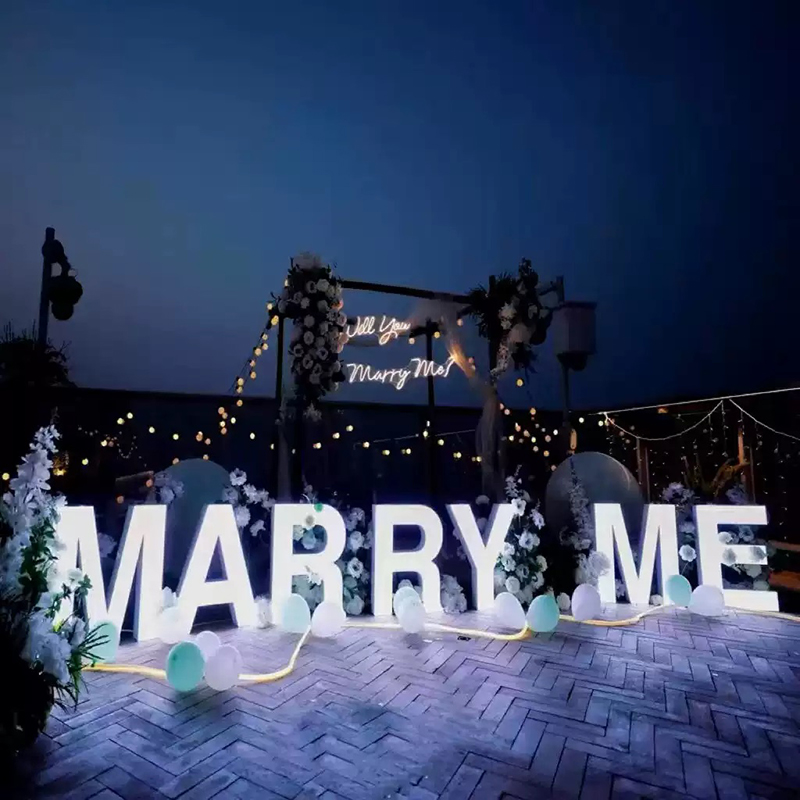
Large format signs and monument signs are built for commercial properties requiring high-visibility branding, permanent site identification, and professional presentation. From oversized building-mounted signage to ground-based monument signs at property entrances, these large-scale signage solutions help businesses gain visibility from roadways, parking lots, and surrounding commercial areas.
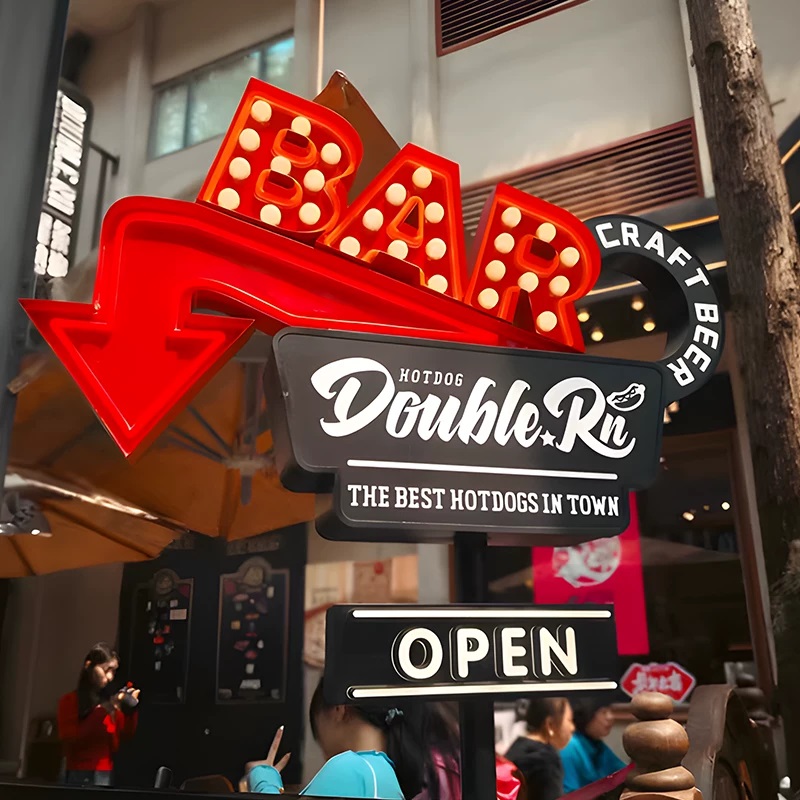
For B2B buyers, large exterior signage requires more than an appealing visual design. Project teams need to evaluate physical dimensions, structural requirements, material selection, lighting systems, local sign regulations, installation conditions, export-grade packaging, and logistics before production begins.
This guide covers the major types of large format signs and monument signs, material and lighting options, manufacturing processes, structural considerations, cost factors, and key criteria international buyers should consider when selecting a professional sign manufacturer.
What Are Large Format Signs?
Large format signs are commercial signs produced at substantially larger dimensions than standard storefront signage.
Common examples include:
- Large building facade signs
- Large channel letter installations
- Large illuminated signs
- Large dimensional logos
- Large metal signs
- Large cabinet signs
- Large commercial identification signs
- Large pylon and freestanding signs
- Large directional and property identification signs
Large format signage is commonly used for shopping centers, commercial office buildings, industrial facilities, corporate campuses, hotels, hospitals, educational institutions, and mixed-use developments.
Because of their increased size and weight, large format signs require more detailed engineering, fabrication, packaging, transportation, and installation planning than conventional smaller signs.
Types of Large Format Signs
Large format signage is a broad category covering different commercial sign systems used for building branding, property identification, tenant identification, and wayfinding.
Large Building Signs
Large Building Signs are mounted directly to the exterior facade of commercial or industrial buildings.
Typical constructions include:
- Large channel letters
- Dimensional metal letters
- Illuminated letters
- Large dimensional logos
- Illuminated logo assemblies
- Fabricated cabinet signs
- Combined logo and lettering systems
The appropriate sign type depends on the building architecture, viewing distance, available mounting surface, local regulations, and brand requirements.
For multi-story buildings, proper sign scaling is especially important. Letters and logos must remain recognizable and legible from the intended viewing distance without becoming visually disproportionate to the building facade.
Large Outdoor Signs
Large outdoor signs are designed for continuous exterior exposure and must withstand wind, rain, sunlight, humidity, temperature changes, and other environmental conditions.
Common material options include aluminum, stainless steel, acrylic, polycarbonate, and other weather-resistant components.
Outdoor large format signs may incorporate:
- Weather-resistant surface finishes
- Protected electrical assemblies
- Reinforced mounting hardware
- Corrosion-resistant fasteners
- Drainage provisions
- UV-resistant materials
- Internal structural reinforcement
Environmental performance should be considered during the design and engineering stages rather than after fabrication has already begun.
Large Custom Signs
Large custom signs are manufactured according to project-specific dimensions, materials, shapes, finishes, lighting requirements, and installation conditions.
Customization may include:
- Overall dimensions
- Logo proportions
- Letter height
- Material selection
- Surface finish
- Lighting configuration
- Mounting framework
- Internal reinforcement
- Installation requirements
Custom fabrication is often necessary when standard sign products cannot provide the required visibility, dimensions, architectural integration, or brand presentation.
Large Illuminated Signs
Large illuminated signs use LED lighting to maintain visibility during nighttime and low-light conditions.
Common lighting configurations include:
- Front illumination
- Back illumination
- Front and back illumination
- Internally illuminated letters
- Illuminated sign cabinets
- External spotlight illumination
- Combined lighting systems
LED technology is widely used for commercial signage because of its energy efficiency, long operating life, and relatively low maintenance requirements.
For large signs, LED positioning must be carefully planned according to the sign dimensions, cabinet depth, face material, letter construction, and desired light distribution.
Large Logo Signs
Large logo signs reproduce a company’s visual identity at an oversized scale.
They may be manufactured as:
- Flat-cut metal logos
- Dimensional metal logos
- Acrylic logos
- Front-illuminated logos
- Back-lit logos
- Layered dimensional logos
- Mixed-material logo assemblies
Large logo signs are commonly used on commercial building facades, corporate headquarters, retail properties, hotels, and business campuses.
When a logo is enlarged significantly, the manufacturer should review the artwork carefully to ensure small design details remain suitable for fabrication and installation.
Large Metal Signs
Large metal signs commonly use aluminum or stainless steel as their primary materials.
Aluminum is often selected when weight reduction is important, while stainless steel is frequently chosen for premium architectural applications requiring durability and a distinctive metal finish.
Available finishes may include:
- Brushed metal
- Polished metal
- Painted finishes
- Powder coating
- PVD coating
- Anodized finishes
- Custom color-matched finishes
Material selection should balance appearance, weight, structural requirements, environmental exposure, and long-term performance.
Large 3D Signs
Large 3D signs use dimensional construction to create physical depth and stronger visual impact.
Common examples include:
- Large dimensional letters
- Dimensional logos
- Fabricated metal structures
- Layered acrylic assemblies
- Sculptural brand elements
- Large channel letters
Dimensional construction can create stronger shadow effects and improve the visual presence of signage compared with flat signs.
For more information about dimensional signage, see our guide to https://hongbosign.com/3d-signs/
Large Channel Letter Signs
Large channel letter signs are oversized channel-letter assemblies designed for commercial buildings, shopping centers, retail developments, and other high-visibility locations.
Common configurations include:
- Front illumination
- Back illumination
- Front and back illumination
- Non-illuminated solid faces
- Custom metal finishes
- Translucent acrylic faces
- High-output LED modules
Oversized channel letters may require deeper returns, reinforced mounting systems, additional structural support, and carefully calculated LED layouts.
For more information about channel letter construction and lighting configurations, see our guide to https://hongbosign.com/channel-letters-types-and-lighting-options/ .
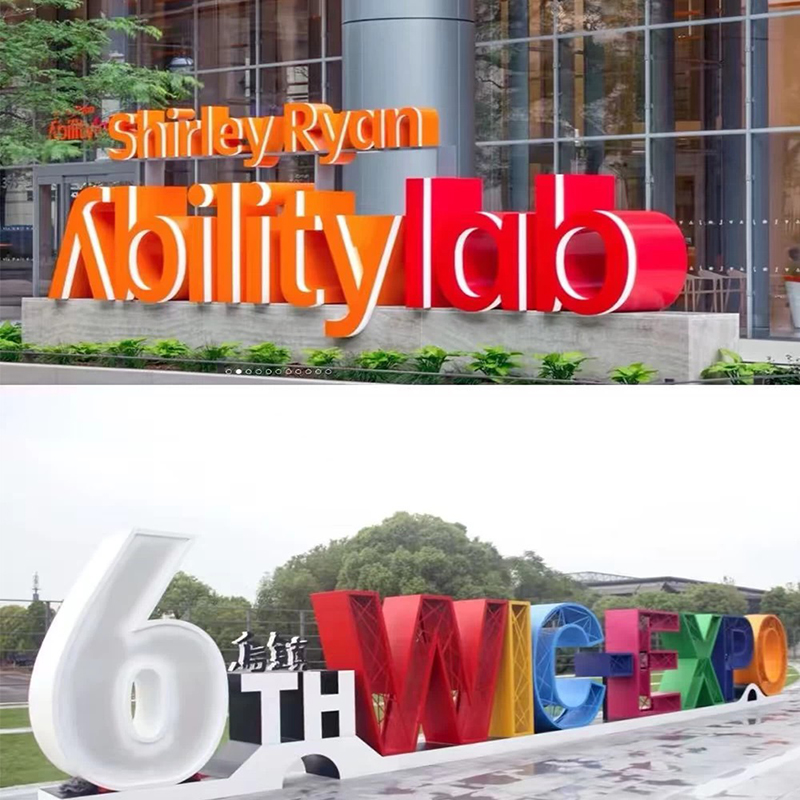
Large Commercial Signs
Large commercial signs are a broad category covering oversized signage used for business branding, property identification, tenant identification, and directional guidance.
Examples include:
- Building-mounted signs
- Monument signs
- Pylon signs
- Large directory boards
- Large dimensional logos
- Large illuminated assemblies
- Property identification markers
The appropriate solution depends on the property size, viewing distance, traffic conditions, architectural environment, and local sign regulations.
Monument Signs
What Are Monument Signs?
Monument signs are freestanding, ground-mounted signs typically installed at commercial property entrances.
Unlike building-mounted signs, monument signs stand independently and are generally anchored to permanent foundations or engineered base structures.
They are commonly used for:
- Office parks
- Shopping centers
- Corporate campuses
- Hotels
- Industrial parks
- Residential communities
- Schools
- Hospitals
- Mixed-use commercial developments
Monument signs generally use a low-profile, wide-footprint design that provides a strong architectural presence without the extreme height of a pylon sign.
A monument sign is one type of freestanding commercial signage, while large format signage is a broader category that can include building-mounted, ground-mounted, and elevated sign systems.
Custom Monument Signs
Custom monument signs are designed according to the property’s architecture, brand identity, site dimensions, and installation conditions.
A custom monument sign may incorporate:
- Precision-fabricated metal structures
- Aluminum panels
- Stainless steel decorative elements
- Acrylic components
- Illuminated channel letters
- Dimensional logos
- Architectural details
- Internal reinforcement
- Stone or masonry-style elements
Because monument signs often become permanent property landmarks, their proportions, materials, finishes, and lighting should coordinate with surrounding buildings, landscaping, and architectural elements.
Illuminated Monument Signs
Illuminated monument signs integrate lighting to maintain visibility after sunset.
Common lighting configurations include:
- Internally illuminated faces
- Illuminated channel letters
- Back-lit dimensional letters
- Halo-lit logos
- External landscape spotlights
- Combined illumination systems
LED modules may be installed inside sign structures, illuminated letters, or translucent faces depending on the design.
Outdoor electrical components should be selected according to the environmental conditions and applicable electrical requirements of the installation location.
Monument Sign Manufacturer Capabilities
A professional monument sign manufacturer must be capable of managing more than basic panel fabrication.
Depending on the project, a qualified manufacturer may coordinate:
- Design review
- Production drawing development
- Material specification
- Precision metal fabrication
- Foundation specification information
- LED lighting integration
- Heavy-duty mounting systems
- Surface finishing
- Assembly
- Quality control
- Installation planning support
International B2B buyers should ask whether the manufacturer can provide detailed production drawings and fabrication information based on the approved project requirements.
For site-specific structural and foundation requirements, final engineering may need to be completed or approved by qualified professionals familiar with local building codes and site conditions.
Monument Sign Fabrication Workflow
1. Design and Structural Review
The manufacturer reviews the overall dimensions, site conditions, materials, logo placement, lighting configuration, mounting approach, and installation requirements.
Potential fabrication and installation issues should be identified before production begins.
2. Foundation Guidance
Foundation requirements depend on factors such as:
- Sign dimensions
- Overall weight
- Sign height
- Wind conditions
- Soil characteristics
- Installation location
- Local building codes
For international projects, the final site-specific foundation design should be coordinated with local engineers or installation contractors where required.
3. Material Fabrication
The main sign body and structural components are fabricated according to approved production drawings.
Depending on the design, manufacturing may involve:
- Laser cutting
- CNC machining
- CNC routing
- Metal bending
- Welding
- Acrylic fabrication
- Composite assembly
4. Face and Brand Element Installation
Dimensional letters, logos, illuminated panels, decorative components, and other brand elements are installed onto the main monument structure.
The manufacturer should verify alignment, spacing, dimensions, and visual proportions against the approved drawings.
5. Lighting Integration
LED modules, wiring, power supplies, and related electrical components are integrated into the sign assembly.
The completed lighting system should be tested for:
- Brightness
- Light distribution
- Uniformity
- Dark spots
- Electrical connections
- Power supply operation
6. Surface Finishing
Components receive the specified finish according to the approved project requirements.
Possible treatments include:
- Spray painting
- Powder coating
- Brushed metal
- Polished metal
- PVD coating
- Anodizing
- Custom color matching
For multi-location projects, finish and color consistency should be controlled across the complete production run.
7. Quality Control
Final inspection should cover:
- Dimensions
- Shape and alignment
- Surface finish
- Color consistency
- Welding quality
- Structural components
- Lighting performance
- Electrical connections
- Mounting hardware
Photographs and videos can also be provided to international B2B buyers as part of pre-shipment inspection and production confirmation.
Freestanding Business Signs
Freestanding business signs operate independently from building facades.
This category includes:
- Monument signs
- Pylon signs
- Pole-mounted signs
- Ground-mounted identification markers
- Property entrance signs
- Site directory boards
Freestanding signage is particularly useful when a building is set back from a roadway or when a property needs to be identified before visitors reach the main building.
Freestanding Monument Signs
Freestanding monument signs are self-supporting ground-based structures used to identify properties, business parks, commercial developments, and institutional campuses.
They are commonly installed near:
- Main entrances
- Driveways
- Parking lot entrances
- Property boundaries
- Road frontages
Content may include property names, company logos, tenant directories, addresses, or directional information.
Pylon Sign Manufacturer
A pylon sign manufacturer specializes in tall freestanding signs supported by poles or structural frames.
Pylon signs are generally taller than monument signs and are designed for long-distance visibility from roads and highways.
Common applications include:
- Shopping centers
- Hotels
- Gas stations
- Automotive dealerships
- Highway-adjacent businesses
- Retail developments
- Multi-tenant commercial properties
Because of their height and exposure to wind loads, pylon signs require careful structural engineering and foundation planning.
For large pylon projects, buyers should ask manufacturers about structural drawings, mounting details, electrical requirements, fabrication specifications, and installation information.

Ground-Mounted Signs
Ground-mounted signs are installed directly into ground foundations rather than attached to a building.
Examples include:
- Monument signs
- Site directory boards
- Property identification markers
- Entrance signs
- Landscape-integrated signage
Ground-mounted solutions provide permanent identification while allowing the sign design to coordinate with surrounding architecture and landscaping.
Entrance Monument Signs
Entrance monument signs are installed at primary gateways to commercial and institutional properties.
They are commonly used for:
- Office parks
- Industrial sites
- Hotels
- Hospitals
- Schools
- Shopping centers
- Residential developments
- Corporate campuses
Because entrance signs are often one of the first major visual elements visitors encounter, they need to balance visibility, branding, architectural integration, and site aesthetics.
Property Entrance Signs
Property entrance signs identify businesses, campuses, developments, or facilities at primary access points.
Possible formats include:
- Monument signs
- Post-and-panel signs
- Illuminated entrance signs
- Directional markers
- Custom architectural structures
Large developments may combine entrance signs with secondary wayfinding signage to guide visitors toward individual buildings, tenant areas, parking facilities, and other destinations.
Materials for Large Format and Monument Signs
Material selection should balance physical size, installation environment, appearance, structural requirements, lighting design, and expected service life.
Aluminum
Aluminum is widely used for large exterior signage because of its relatively low weight, corrosion resistance, and fabrication flexibility.
It can be processed through:
- Laser cutting
- CNC machining
- Bending
- Welding
- Painting
- Powder coating
- Anodizing
Aluminum is particularly useful when controlling total sign weight is important.
Stainless Steel
Stainless steel provides durability and a premium architectural appearance.
Available finishes include:
- Brushed stainless steel
- Mirror-polished stainless steel
- Painted stainless steel
- PVD-coated stainless steel
It is frequently used for corporate, hospitality, retail, and architectural signage where appearance and long-term durability are both important.
Acrylic
Acrylic is commonly used for illuminated sign faces, dimensional components, and translucent lighting elements.
It is available in different:
- Colors
- Thicknesses
- Opacity levels
- Surface finishes
Acrylic can be combined with internal LED modules to create illuminated monument signs, letters, logos, and large sign faces.
Polycarbonate
Polycarbonate can be used where enhanced impact resistance is required.
It may be suitable for specialized sign faces and components exposed to higher physical impact risks.
Composite and Mixed-Material Construction
Large monument signs frequently combine several materials to achieve specific structural and aesthetic goals.
For example, a monument sign may combine:
- Aluminum structural framing
- Stainless steel decorative surfaces
- Acrylic illuminated faces
- Dimensional metal letters
- Integrated LED lighting
The optimal material combination depends on the project’s dimensions, environment, design requirements, and fabrication method.
Lighting Options for Large Signs and Monument Signs
Lighting can significantly improve nighttime visibility, brand recognition, and the visual impact of large commercial signage.
Front-Lit Signs
Front-lit signs use LED modules or other light sources to illuminate the visible face of the sign or individual letters.
This approach provides direct illumination and strong visual presence.
Back-Lit Signs
Back-lit signs position the light source behind dimensional letters or logos to create a halo effect.
This style is frequently used for corporate, hospitality, retail, and architectural signage.
Internally Illuminated Signs
Internally illuminated signs contain LED modules inside a sign housing, letter, cabinet, or monument structure.
They are commonly used for:
- Channel letters
- Illuminated cabinets
- Monument sign panels
- Illuminated logos
- Dimensional illuminated letters
The internal depth, face material, and LED spacing must be properly matched to achieve consistent illumination.
External Illumination
External illumination uses spotlights, floodlights, or landscape-grade lighting positioned outside the sign.
This can be useful when internal LED integration is impractical or when a specific architectural lighting effect is required.
Lighting Considerations for Buyers
When specifying a lighting system, buyers should consider:
- Required viewing distance
- Target brightness
- Color temperature
- LED consistency
- Power consumption
- Maintenance access
- Electrical requirements
- Environmental conditions
- Local lighting regulations
- Applicable dark-sky requirements
Design and Manufacturing Process for Large Format Signs
Large-scale signage requires coordination between design, engineering, fabrication, finishing, lighting assembly, quality control, packaging, and shipping.
1. Project Brief and Design Review
The process begins with buyer-supplied artwork, drawings, specifications, dimensions, and project requirements.
Important information includes:
- Sign dimensions
- Logo and lettering artwork
- Installation location
- Viewing distance
- Material preference
- Lighting requirements
- Order quantity
- Surface finish
- Mounting method
- Delivery destination
The manufacturer reviews the information to identify potential fabrication and installation challenges.
2. CAD Drawings and Engineering
Complex projects may require detailed production drawings covering:
- Overall dimensions
- Material thickness
- Internal reinforcement
- Mounting points
- LED positioning
- Electrical routing
- Assembly details
For freestanding signs, structural requirements should account for factors such as sign weight, wind loads, mounting conditions, and foundation requirements.
3. Prototype or Sample Approval
For complex projects or multi-location orders, a prototype or production sample may be produced before full manufacturing.
Buyers can review:
- Dimensions
- Material quality
- Logo proportions
- Color
- Surface finish
- Lighting effect
- Construction details
Sample approval can help establish a consistent production standard for larger orders.
4. Material Preparation
Raw materials are processed according to approved drawings using suitable fabrication methods.
These may include:
- Laser cutting
- CNC cutting
- CNC routing
- Waterjet cutting
- Metal bending
- Welding
- Acrylic fabrication
5. Precision Fabrication
Individual components are assembled into complete sign structures.
For large signs, internal reinforcement may be required to maintain dimensional stability during production, transportation, and installation.
6. Surface Finishing
Finished components receive their specified surface treatment.
Common options include:
- Spray painting
- Powder coating
- Brushed metal
- Polished metal
- PVD coating
- Anodizing
- Custom color matching
For commercial branding programs involving multiple signs or locations, consistent color and finish are particularly important.
7. LED Integration
For illuminated products, LED modules, wiring, power supplies, and related components are installed during assembly.
Quality checks should verify:
- Light distribution
- Brightness consistency
- LED spacing
- Dark areas
- Electrical connections
- Power supply operation
8. Assembly and Quality Control
The completed signs are inspected against the approved specifications.
Inspection may include:
- Overall dimensions
- Logo and letter proportions
- Structural integrity
- Surface finish
- Color consistency
- Welding quality
- Lighting performance
- Electrical connections
- Mounting hardware
9. Packaging and Export Preparation
Large signs create additional logistics challenges because of their size, weight, irregular geometry, and finished surfaces.
Export packaging may include:
- Protective foam
- Individual component wrapping
- Edge protection
- Custom internal supports
- Reinforced cartons
- Heavy-duty wooden crates
- Moisture protection
Packaging should be designed around the actual product and selected shipping method.
For international B2B orders, buyers should also consider container utilization, dimensional restrictions, handling requirements, and destination-country logistics.
Structural Engineering and Installation Considerations
Large format and freestanding signs should be treated as engineered physical products rather than simply oversized graphics.
Wind Loads
Exterior signage can experience significant wind forces, particularly when installed at height or in open areas.
The sign structure, mounting hardware, support system, and foundation must be appropriate for the conditions at the installation site.
For site-specific projects, local structural requirements should be confirmed before production.
Foundation
Freestanding monument and pylon signs generally require purpose-built foundations or engineered base structures.
Foundation requirements can depend on:
- Sign dimensions
- Total weight
- Sign height
- Wind conditions
- Soil characteristics
- Installation location
- Local building codes
Final foundation engineering should be coordinated with qualified local engineers or installation contractors where required.
Mounting Systems
Large building-mounted signs require robust mounting systems capable of supporting the sign weight and transferring loads safely into the building structure.
Possible mounting approaches include:
- Stud mounting
- Bracket systems
- Support rails
- Custom-fabricated frames
The mounting concept should be considered during the early engineering stage rather than after fabrication.
Local Codes and Permits
Sign regulations vary between cities, states, countries, and jurisdictions.
Local requirements may regulate:
- Sign area
- Maximum height
- Placement
- Setbacks
- Illumination
- Digital displays
- Structural requirements
International B2B buyers should confirm local permitting and regulatory requirements before final production drawings are approved.
How Much Do Large Format Signs and Monument Signs Cost?
There is no universal fixed price for large format signs or monument signs because every project involves different dimensions, materials, fabrication methods, lighting systems, and installation conditions.
Key cost factors include:
- Overall dimensions
- Sign height
- Material type
- Material thickness
- Construction complexity
- Structural requirements
- Lighting configuration
- LED quantity
- Surface finish
- Mounting hardware
- Foundation requirements
- Prototype or sampling requirements
- Order quantity
- Packaging
- Shipping destination
A simple flat metal sign can have a very different production cost from a fully illuminated monument sign with internal reinforcement, dimensional letters, custom finishing, and export packaging.
Similarly, a tall pylon sign generally requires more structural engineering and logistics planning than a low-profile monument sign.
For this reason, professional manufacturers normally provide project-specific quotations rather than fixed catalog prices.
What Should B2B Buyers Provide to a Sign Manufacturer?
Complete project information helps manufacturers provide more accurate quotations and practical production recommendations.
When requesting a quotation, buyers should provide:
- Logo or vector artwork
- Required dimensions
- Order quantity
- Preferred materials
- Surface finish
- Lighting requirements
- Installation location
- Indoor or outdoor application
- Mounting requirements
- Reference photos
- Technical drawings, if available
- Delivery destination
- Target completion date
Site photographs, architectural drawings, and installation information are particularly valuable for large or complex projects.
If some details are not finalized, buyers can still provide the available artwork and project information. An experienced manufacturer can then identify the missing specifications and suggest practical fabrication options.
Applications of Large Format and Monument Signs
Shopping Centers
Shopping centers often use several types of large commercial signage, including:
- Monument signs
- Pylon signs
- Building facade signs
- Tenant identification signs
- Directional signs
Large entrance monuments establish property-level branding, while additional signage helps visitors locate individual tenants and facilities.
Corporate Campuses
Corporate campuses may use:
- Oversized dimensional logos
- Building-mounted signs
- Entrance monument signs
- Directional signage
- Parking identification signs
A consistent signage system can help maintain corporate branding across multiple buildings and entrances.
Industrial Facilities
Industrial parks, factories, warehouses, and logistics facilities often require highly visible building identification and property entrance signage.
Durable materials and weather-resistant finishes are particularly important for these environments.
Hotels and Resorts
Hotels and resorts may integrate:
- Large illuminated building signs
- Monument signs
- Dimensional logos
- Entrance signs
- Directional signage
Signage design should coordinate with the property’s architecture, landscaping, and overall visual identity.
Retail Properties
Retail businesses use large building signs, channel letters, monument signs, and illuminated logos to attract attention from roadways and parking areas.
For high-traffic locations, visibility from the intended viewing distance is a key design consideration.
Hospitals and Institutional Facilities
Hospitals, universities, schools, and other institutional properties may combine monument signs with comprehensive wayfinding systems.
These projects need to balance brand presentation with practical visitor navigation.
Automotive Dealerships
Automotive dealerships often use large building-mounted signs, illuminated logos, roadside pylon signs, and entrance markers.
Roadside visibility is particularly important for dealerships located along major traffic routes.
Large Format Signs vs. Monument Signs
Although these terms are sometimes used together, they describe different categories of commercial signage.
表格
| Feature | Large Format Signs | Monument Signs |
|---|---|---|
| Primary definition | Large-scale signage of various mounting styles | Freestanding ground-mounted signage |
| Typical location | Building facades or elevated external structures | Property entrances or roadside locations |
| Mounting | Building-fixed or frame-supported | Ground-foundation mounted |
| Primary purpose | Building branding and identification | Property identification and entrance branding |
| Height | Highly variable | Usually low-profile |
| Structural requirements | Depends on installation conditions | Often requires foundation engineering |
| Lighting | Optional | Optional |
| Common materials | Aluminum, stainless steel, acrylic | Metal, acrylic, composite, masonry blends |
| Typical users | Commercial buildings, retail properties, factories | Shopping centers, campuses, hotels, developments |
A single commercial property can use both product categories.
For example, a shopping center may use large illuminated building signs for anchor tenants while installing monument or pylon signs at the main property entrances.
How to Choose a Large Format or Monument Sign Manufacturer
Large-scale signage projects require capabilities beyond basic sign printing or simple panel fabrication.
When evaluating manufacturers, B2B buyers should consider whether the supplier has experience with:
- Professional design review
- CAD drawing development
- Engineering coordination
- Metal fabrication
- Acrylic processing
- CNC and laser cutting
- Welding and metal forming
- LED integration
- Surface finishing
- Assembly
- Quality control
- Export packaging
- International shipment preparation
For larger projects, buyers should also ask about:
- Previous large-scale projects
- Production capacity
- Prototype approval
- Quality-control procedures
- Packaging methods
- International shipping experience
- Production communication
- Drawing approval procedures
A capable manufacturer should identify fabrication, packaging, and logistics risks early rather than discovering them after production has started.
Why Work With an Experienced Large Sign Manufacturer?
Large commercial signage combines several manufacturing disciplines, including metal fabrication, acrylic processing, structural construction, LED integration, surface finishing, assembly, quality control, packaging, and international logistics.
Working with one experienced manufacturer can simplify communication and production coordination for international B2B buyers.
Instead of managing multiple suppliers for different components, buyers can work through one production team that coordinates the major manufacturing stages and maintains greater control over materials, fabrication tolerances, finishes, assembly, and packaging.
The right manufacturer should be able to balance visual brand requirements with practical considerations such as manufacturing feasibility, structural performance, installation conditions, and international shipping.
Conclusion
Large format signs and monument signs provide important solutions for commercial property branding, site identification, roadside visibility, and visitor wayfinding.
From building-mounted large signs and illuminated dimensional logos to channel letters, monument signs, pylon signs, and freestanding property markers, these products can be adapted to a wide range of commercial environments.
For B2B buyers, successful large-scale signage projects involve much more than visual design. Structural requirements, material selection, lighting, surface finishing, mounting systems, local regulations, packaging, and logistics should all be considered before production begins.
Working with an experienced sign manufacturer can simplify the process from initial design review through fabrication, quality control, packaging, and export shipment.
Hongbo Signage manufactures large format signs, oversized building signs, custom monument signs, illuminated monument signs, pylon signs, dimensional logos, and freestanding commercial signage for international B2B customers.
Buyers can provide artwork, dimensions, material preferences, lighting requirements, order quantity, installation information, and delivery destination for project review. Our team can evaluate the requirements and develop a practical manufacturing and export solution for the project.
FAQ About Large Format Signs and Monument Signs
What are large format signs?
Large format signs are commercial signs produced at dimensions substantially larger than standard storefront signage. They can include large building signs, dimensional logos, channel letters, illuminated assemblies, monument signs, and other oversized commercial signage.
What are monument signs?
Monument signs are freestanding, ground-mounted signs commonly installed at commercial property entrances. They are widely used for shopping centers, office parks, corporate campuses, hotels, industrial properties, educational facilities, and other developments.
What is the difference between a monument sign and a pylon sign?
Monument signs are generally low-profile ground-mounted structures, while pylon signs are taller freestanding structures designed for greater long-distance visibility from roads and highways.
What materials are used for large exterior signs?
Common materials include aluminum, stainless steel, acrylic, polycarbonate, and steel. Monument signs may also incorporate composite, decorative, or masonry-style elements depending on the project design.
Can large format signs be illuminated?
Yes. Large format signs can use front illumination, back-lit halo effects, internal LED modules, illuminated face panels, or external spotlights. The appropriate lighting method depends on the sign construction, viewing distance, environment, and desired appearance.
Are monument signs suitable for outdoor use?
Yes. Monument signs are commonly designed for exterior property identification. The materials, finishes, electrical components, structural system, and foundation should be selected according to local environmental and installation conditions.
Do large monument signs require engineering?
Large or tall freestanding signs may require structural engineering, particularly where wind loads, foundation requirements, or local building codes apply. Exact requirements depend on the sign dimensions and installation location.
How much do large format signs cost?
The cost depends on dimensions, materials, construction complexity, lighting, surface finishes, structural requirements, order quantity, packaging, and shipping. Custom large format signage is normally quoted according to the individual project specifications.
What information should I provide for a quotation?
Ideally, provide logo artwork, dimensions, quantity, preferred materials, finish requirements, lighting specifications, installation location, reference images, delivery destination, and target completion date.
Can large signs be manufactured for international shipment?
Yes. Large commercial signs can be prepared for international B2B shipment using protective foam, reinforced cartons, custom internal supports, edge protection, or heavy-duty wooden crates depending on the product and shipping method.
Can Hongbo Signage manufacture custom monument and large format signs?
Yes. Hongbo Signage manufactures custom large format signs, monument signs, illuminated monument signs, pylon signs, dimensional logos, and other commercial signage for international B2B projects. Manufacturing can include design review, fabrication, finishing, LED integration, assembly, quality control, and export-grade packaging.