

A store owner opening a second location, a franchise rolling out 15 sites, or an architect specifying lobby branding usually hits the same fork in the road: should they order signs from a local sign company or work with a China sign manufacturer? The answer is not obvious, and the internet is full of outdated advice on both sides. One camp claims overseas factories are cheap but risky; the other claims local shops simply cannot compete on price.
This article gives you an honest, side-by-side comparison based on what an OEM/ODM custom signage manufacturer in Guangzhou, China actually does every day. We compare unit cost, MOQ, lead time, quality control, communication, shipping, and the specific situations where each path makes the most sense.

How a Local Sign Shop Works
A local sign shop typically designs, fabricates, and installs signs in one city or region. It sources raw materials domestically, assembles with a small team, and can send a technician to your wall in days.
Strengths:
- Same-time-zone communication and face-to-face site surveys.
- Fast turnaround for one-off emergencies.
- Handles installation, permits, and local electrical codes.
- Easy to hold accountable when something fails.
Weaknesses:
- Higher labor cost per square meter of fabrication.
- Limited material and finish range.
- Higher per-unit price on multi-location orders.
- Often resells or sub-contracts imported components.
How an Overseas Sign Factory Works
An overseas sign factory, particularly in a cluster like Guangzhou’s Baiyun and Panyu districts, runs integrated lines: laser cutting, CNC bending, TIG welding, polishing, painting or powder coating, LED assembly, electrical testing, and aging tests under one roof. Raw material supply is dense, and skilled fabrication labor is structured around high-volume repeatable work.
Strengths:
- Lower unit cost on medium and large orders.
- Wider material palette (304/316 stainless, marine-grade finishes, specialty acrylics).
- Consistent repeatability across multi-location rollouts.
- Direct control over QC and aging testing before export.
Weaknesses:
- Longer lead time including shipping.
- Time-zone and language communication.
- You must manage (or pay an agent to manage) installation locally.
- Import duties, customs clearance, and freight are your responsibility.

Unit Cost: Where the Factory Wins
The single biggest reason buyers turn to a China sign manufacturer is unit cost. On a single small non-lit lobby sign, the gap is small or nonexistent, because local overhead on one piece is comparable. On illuminated channel letters, lightboxes, or multi-piece orders, the gap opens up significantly.
For example, our polished stainless steel illuminated letters or backlit channel letters require precision welding and polishing that is labor-intensive. A Guangzhou factory doing this every day can deliver backlit channel letters at a fraction of a local fabricator’s quote, with tighter tolerance and a more consistent finish. The same is true for our flat-panel LED lightbox signs, where extrusion, LED layout, and box sealing are repeatable production steps rather than one-off shop work.
As an indicative budget reference point, a single mid-sized illuminated sign might land in the rough range of $1,500-$4,000 locally versus $600-$1,800 landed from an overseas OEM, depending on material and quantity; your actual supplier quotation will reflect your project. To understand exactly where those numbers come from, read our breakdown of how custom sign cost breaks down.
MOQ and Batch Flexibility
Local shops rarely enforce a minimum order quantity; they will happily build one sign. Overseas factories traditionally had high MOQs, but modern OEM/ODM shops serving North American and European brands have lowered entry points. At Hongbo Signage, typical entry points for most standard channel letters and lightboxes start around 1-5 pieces, which means even a single-location business can test the relationship before a big rollout; exact minimums depend on the product.
Where the factory really shines is at 5, 10, 20, or 50 identical signs. Setup, tooling, and engineering time are amortized, and the per-unit price drops meaningfully. A local shop quoting 20 identical signs is essentially hand-building each one; a factory is running a production batch.
Lead Time: The Real Numbers
Lead time is where buyers most often misjudge overseas sourcing.
- Local sign shop: design approval to install typically 7-20 working days.
- Overseas factory production: typically 10-25 working days after artwork approval.
- Sea freight to US West Coast: roughly 14-25 days port-to-port, plus customs.
- Sea freight to Europe: roughly 25-35 days.
- Air freight: 5-10 days door-to-door, but expensive.
Total overseas lead time is usually 35-60 days for sea freight. If your grand opening is in three weeks, buy locally. If you are planning a 6-month franchise rollout, the overseas timeline is comfortable and the savings are substantial.
Quality Control: What to Actually Expect
The stereotype is that “Chinese signs are cheap but low quality.” The reality is that quality depends entirely on the factory you choose. A professional OEM/ODM facility runs:
- Incoming material inspection on stainless steel and acrylic batches.
- Laser cutting tolerance checks.
- Electrical testing on every illuminated unit before closure.
- 24-72 hour aging tests to catch LED or driver failures.
- Waterproofing and sealing verification for outdoor units.
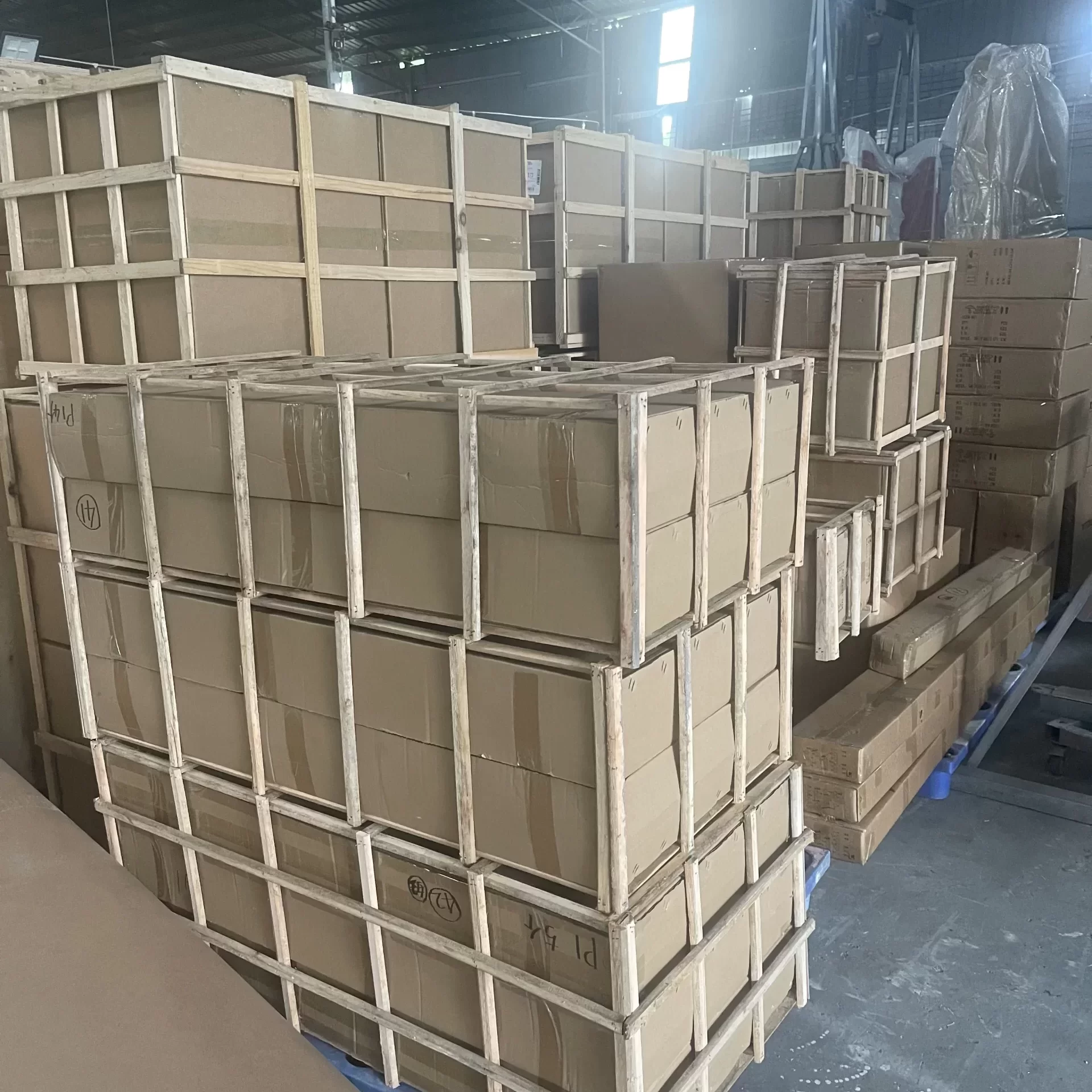
- Export-grade foam and wooden crate packing to survive container shipping.
Ask for aging test videos, material certificates, and reference projects in your country. A serious factory will provide them without hesitation.
Shipping, Duties and Import Paperwork
When you import signs from China, you are responsible for freight, customs entry, and duty. For US importers, our guide to importing signs from China to the USA walks through HS codes, commercial invoices, and ocean versus air choices. For EU buyers, importing signs from China to Europe covers VAT, EORI, and CE-related considerations. Australian and Canadian buyers will find importing signs to Australia and Canada a straightforward consolidation of similar paperwork.
A good factory will pack signs in export-grade wooden crates, mark them clearly, and provide a full set of shipping documents so your broker can clear them without delay.
Communication and Working Across Time Zones
This is the most underrated factor. A factory that only responds through chat app screenshots will frustrate you. A professional OEM partner sends formal quotations, CAD drawings for your approval, photo progress reports at each production stage, and a final QC photo set before crating. Time-zone gaps are real but manageable when both sides agree on a clear approval workflow.
A practical tip: ask the factory up front for two or three fixed approval gates — artwork sign-off, material and color swatch confirmation, and final QC photos before crating. Build your internal approver around those gates rather than treating every message as urgent. If you require a response within one business day, say so in the first email; factories that cannot commit to that SLA will slow you down on every future order. We also recommend naming a single point of contact on your side so the factory is not receiving conflicting feedback from different managers.
When to Choose Local, When to Choose Overseas
Choose a local sign company when:
- You need one sign installed in under 2-3 weeks.
- The site requires immediate survey, structural engineering, or crane work.
- You want the sign shop to handle permits and electrical inspection.
- The project is a one-off with no repeat expected.
Choose an overseas China sign manufacturer when:
- You are ordering 2 or more identical signs, or planning a rollout.
- You want premium materials (316 stainless, marine-grade, specialty finishes).
- You value consistency across locations.
- You can plan 35-60 days ahead.
- You want a production partner that will manage your reorders for years.
What Buyers Should Prepare for a Sign Quote
A well-prepared brief gets you a fair apples-to-apples quote faster, whichever path you choose. Gather these before you send RFQs:
- Vector artwork in AI/EPS/PDF with fonts outlined, so both local and overseas suppliers price the same design.
- Final dimensions and quantity, including how many identical signs and how many locations.
- Material and finish spec: acrylic, 304/316 stainless, powder-coated color, with Pantone/RAL values.
- Lighting requirements: front-lit, backlit, LED neon, or non-lit, plus color temperature.
- Mounting and wall details: wall material, standoff distance, raceway or concealed wiring.
- Shipping destination and timeline: country, port or door address, and your required install date.
- Certification needs: UL, CE, or local electrical standards your project must meet.
- Local installation contact: who will mount and wire the sign on-site, so the factory can match hardware and drawings.

Frequently Asked Questions
Q: Is it safe to import signs from China for the first time?
Yes, if you choose a factory with export experience, request sample photos and references, and work with a freight forwarder who handles commercial shipments. Start with a small trial order before committing to a rollout.
Q: How much cheaper is a China sign manufacturer compared to local?
For medium to large illuminated signs, buyers often see meaningful savings on landed cost versus local retail pricing; the gap varies by product, material, and quantity, narrowing on small one-off signs and widening on multi-unit orders.
Q: What is the typical MOQ for custom signs from China?
Most OEM/ODM factories accept 1-5 pieces for standard channel letters and lightboxes. Lower MOQs help small brands test the relationship before committing to a full rollout.
Q: How long does it take to get signs made in China and shipped?
Production takes 10-25 working days after artwork approval. Sea freight adds 14-35 days depending on destination; air freight adds 5-10 days at a higher cost.
Q: Who handles installation when I buy overseas?
You arrange a local sign contractor or electrician in your city. The factory provides mounting drawings, electrical diagrams, and installation manuals so your local team can mount and wire the sign correctly.
Conclusion
There is no universal winner between a China sign manufacturer and a local sign company. Local shops win on speed, on-site service, and permit management. Overseas factories win on unit cost, material quality, and consistency across multi-location orders. The smartest strategy is to use local for emergencies and one-offs, and build a long-term OEM/ODM relationship with a Guangzhou-based factory for your repeat rollout program. Either way, start with a clear budget, approved vector artwork, and a realistic timeline.
Comparing overseas factories with local sign shops for your next order?
Hongbo Signage provides OEM/ODM custom signage manufacturing from Guangzhou, China. Get a custom sign quote within 24 hours.